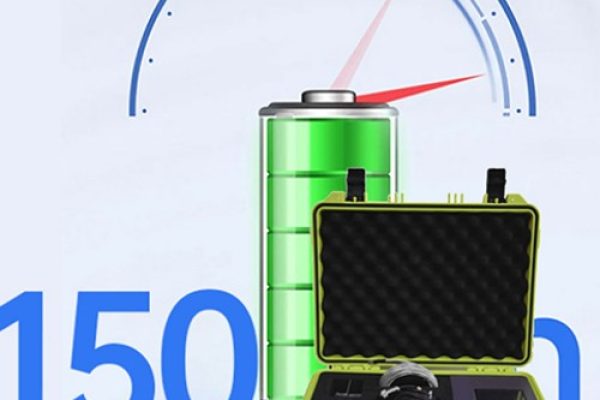
Solar irradiance is a core basic parameter for photovoltaic module power calculation, power generation evaluation, power station acceptance, and resource survey. The measurement accuracy directly determines the compliance of detection data and the accuracy of power station revenue calculation. There are common pain points in the current industry, such as spectral mismatch of ordinary irradiance meters, large temperature drift errors, single horizontal plane measurement, and inability to synchronize collection with IV equipment. Manually separating the recording of irradiance and electrical performance data can easily lead to deviations in the conversion process, which cannot meet the high standard requirements of third-party metrology and grid integration acceptance. Jiangsu Jingwei relies on the accumulation of precision thermopile sensing and intelligent compensation algorithm technology to launch the JW-F04 portable irradiance meter, which adopts a secondary standard photovoltaic sensor to achieve multi parameter synchronous acquisition, slope fitting measurement, intelligent working condition conversion, and ultra long…
READ MORE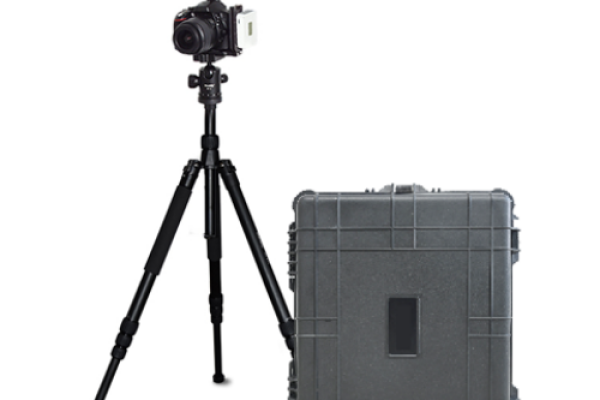
As the scale of photovoltaic stock continues to expand, hidden faults such as internal cracking, virtual soldering, grid breakage, PID decay, and battery debris have gradually become key factors restricting the power generation revenue of power plants and inducing safety hazards. Traditional laboratory EL detectors are bulky and rely on dark rooms for shading, making it impossible to enter outdoor fields such as mountains, rooftops, and floating photovoltaics for operation; Early simple portable EL devices had blurry imaging and severe interference from stray light, and could only be detected at night, greatly extending the project detection period. Jiangsu Jingwei Technology focuses on the pain points of the outdoor non-destructive testing industry, integrating multiple self-developed technologies such as infrared optics, intelligent stabilized power supply, and lightweight structural design. It has launched the JW-EL2 portable EL detector, which achieves high-definition imaging 24/7 during day and night, fast operation by a single person,…
READ MORE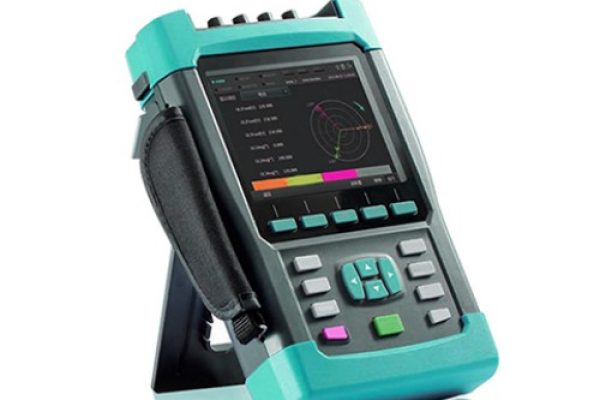
The dual carbon strategy continues to advance, and the photovoltaic industry has entered a new stage of high-power, high-voltage, and refined operation. From component factory quality inspection, power station grid connection acceptance to inventory power station fault diagnosis, accurately obtaining component IV characteristic curves and determining power generation performance has become an essential requirement for the industry. Traditional large-scale IV testing equipment has a large volume and can only be used indoors. Ordinary handheld testers have insufficient range and low accuracy, and cannot adapt to complex outdoor scenarios such as mountains, rooftops, and water-based photovoltaics, which restricts the quality control efficiency of the entire photovoltaic industry chain. Jiangsu Jingwei Technology has been deeply involved in the research and development of photovoltaic precision testing equipment for more than ten years. Relying on independent circuit algorithms and core technologies of capacitive loads, it has launched the JW-IV12 portable IV tester, which has…
READ MORE
Solar irradiance is the core environmental parameter that determines the power generation performance of photovoltaic modules. The site selection resource survey, module IV power calibration, power plant PR performance ratio calculation, power generation attenuation evaluation, and third-party acceptance certification all rely on accurate and reliable irradiance measurement data. The ordinary civilian irradiance meters on the market have shortcomings such as poor spectral matching, large measurement errors, bulky body, inability to synchronously collect multiple environmental parameters, and lack of temperature compensation. Data drift is severe in outdoor high and low temperature and scattered light environments, which directly leads to distortion in component power determination and power plant energy efficiency evaluation results. Jiangsu Jingwei Technology has launched the JW-F04 portable irradiance meter, which adopts a secondary standard level thermopile sensing core, integrates multi parameter synchronous acquisition, intelligent algorithm compensation, and ultra lightweight body design. It has become an essential benchmark measurement equipment…
READ MORE
Hidden defects such as internal cracks, broken grids, virtual soldering, PID attenuation, and black core chips in photovoltaic modules cannot be recognized by the naked eye or conventional thermal imaging equipment, but they are the core hidden dangers that cause the power of the modules to decline year by year, hot spot fires, and power plant revenue to shrink. Traditional EL detectors require the construction of shading shelters and rely on indoor darkroom environments. Outdoor inspections cannot be carried out during the day, and the equipment body is bulky and difficult for a single person to operate. The imaging noise is high and the identification of small defects is poor, seriously slowing down the progress of power plant acceptance and operation and maintenance inspections. Jiangsu Jingwei Technology is deeply involved in the field of photovoltaic infrared non-destructive testing, breaking through the two core technological bottlenecks of sunlight stray light suppression…
READ MORE
In the current development of large-scale photovoltaic industry and refined operation and maintenance of power stations in China, the number of distributed rooftop photovoltaic, mountainous centralized power stations, and industrial and commercial photovoltaic projects continues to rise, with frequent failures such as component power attenuation, string mismatch, and diode damage. Traditional desktop IV testing equipment is bulky, relies on fixed sites, and has a cumbersome testing process. Outdoor sites cannot quickly complete the full dimensional verification of component electrical performance, becoming a core pain point that restricts the efficiency of photovoltaic acceptance, inspection, and fault diagnosis. Jiangsu Jingwei Technology is based on the testing needs of the entire photovoltaic industry chain. With years of experience in precision power measurement technology, we have independently developed and launched the JW-IV12 portable IV tester. With three core innovations of self-developed high-speed load module, AI curve intelligent analysis, and lightweight integrated body, we achieve…
READ MORE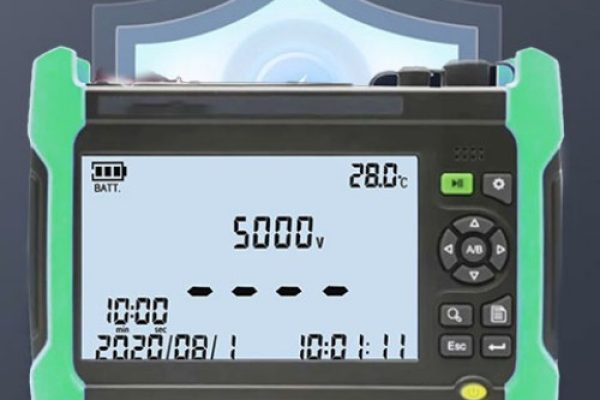
Photovoltaic power plants operate outdoors for a long time, and their component cables, junction boxes, combiner boxes, and inverters are easily affected by sunlight, rain, dust, and aging, which can lead to insulation layer damage and leakage hazards. This can cause continuous loss of power generation, and in severe cases, lead to DC arcs and fire safety accidents. According to the IEC62446 photovoltaic safety testing standard, insulation resistance testing is a mandatory testing item for power station grid connection acceptance, annual operation and maintenance, and fault diagnosis. Traditional insulation testers must be powered off and short circuited in series to measure, making it impossible to operate during daytime power generation periods, significantly increasing the maintenance period; Ordinary equipment has insufficient measuring range, lacks dedicated photovoltaic measurement modes, has large measurement errors in high-voltage string, and poses a risk of electric shock. Jiangsu Jingwei Technology has developed the JW-J25 photovoltaic specific…
READ MORE
Solar irradiance is the core benchmark parameter for photovoltaic module power detection, power generation evaluation, and power station performance analysis. The measurement accuracy of irradiance data directly determines the credibility of IV testing, efficiency accounting, and power generation prediction results. Traditional ordinary irradiation equipment has shortcomings such as poor spectral matching, large temperature drift error, bulky body, low protection level, and inability to adapt to inclined component measurement. In outdoor environments with variable lighting and high and low temperatures, measurement deviations are large, resulting in detection data not being recognized by the power grid and third-party organizations. Jiangsu Jingwei Technology relies on optical sensing precision calibration technology to launch the JW-F04 portable irradiance meter, which has four core advantages: secondary standard sensor, wide range stable measurement, full field portable protection, and multi parameter synchronous acquisition. It has become an essential benchmark instrument for photovoltaic field testing, and is equipped with…
READ MORE
Hidden defects such as internal cracks, broken grids, virtual soldering, black core chips, interlayer delamination, PID attenuation, etc. in photovoltaic modules cannot be identified through visual inspection, multimeter, and IV tester. Long term operation with faults will continue to reduce power generation efficiency, induce hot spots, fire safety accidents, and bring huge economic losses to power station operation. Electroluminescent EL imaging detection is widely recognized as the core non-destructive testing method for internal components in the industry. However, traditional EL equipment generally suffers from problems such as bulky body, blurry imaging, interference from ambient light, cumbersome deployment, and dependence on darkroom environment, making it difficult to use on a large scale on rooftops, mountains, and outdoor power plants. Jiangsu Jingwei Technology has launched the JW-EL2 portable EL detector to meet the urgent need for non-destructive testing in outdoor sites. With four innovative advantages of ultra clear infrared imaging, lightweight integrated…
READ MORE
With the continuous iteration of China's photovoltaic industry towards 1500V high-voltage string and N-type high-efficiency components, centralized ground power stations, industrial and commercial rooftop photovoltaics, household distributed systems, third-party acceptance testing and other scenarios have put forward new and stringent requirements for the range, accuracy, portability, and data compliance of outdoor portable IV testing equipment. Traditional old IV testers suffer from pain points such as insufficient voltage range, slow scanning speed, distortion in low light testing, bulky equipment, and inability to automatically convert STC standard power, which seriously restricts the efficiency of power plant operation and acceptance. Jiangsu Jingwei Technology is deeply engaged in the research and development of photovoltaic precision testing equipment, and has newly launched the JW-IV12 portable IV tester. With four core advantages of lightweight body, full high voltage adaptation, high-speed scanning algorithm, and integrated environment acquisition module, it creates a mobile energy testing solution that covers…
READ MORE
The performance testing of photovoltaic modules IV, evaluation of solar energy resources, verification of power plant power, and conversion of STC standard operating conditions all rely on accurate and stable irradiation and temperature benchmark data. The ordinary civilian radiation meters on the market generally have problems such as poor spectral matching, large measurement errors, severe temperature drift, inability to link with professional detection equipment, bulky and inconvenient body, etc. Separating the recording of light and temperature data for manual conversion can easily produce double errors, directly leading to misjudgment of component power and causing disputes in operation and maintenance rectification and engineering acceptance. Jiangsu Jingwei Technology has matched its own IV and EL detection equipment ecosystem and launched the JW-F04 portable irradiance meter, equipped with a second level standard professional sensing unit, to achieve high-precision acquisition of dual parameters of irradiation and temperature synchronization. The lightweight portable body is suitable…
READ MORE
Microscopic defects such as hidden cracks, virtual soldering, broken grids, and PID attenuation inside photovoltaic modules are the core causes of long-term power generation decline and rising operation and maintenance costs in power plants. Traditional laboratory EL testing equipment has a large volume and can only operate in indoor darkrooms. Old portable EL equipment has shortcomings such as blurred imaging, inability to operate under strong light, dependence on manual visual screening for defects, and bulky and difficult to transport equipment, which cannot meet the batch testing needs of dispersed photovoltaic sites such as mountainous areas, floating areas, and household roofs. Jiangsu Jingwei Technology focuses on the outdoor photovoltaic non-destructive testing track and has launched the JW-EL2 portable EL detector. With four core advantages of 24.16 million pixel high-definition infrared imaging, all-weather anti stray light optical system, AI automatic defect recognition, and lightweight complete portable design, it achieves uninterrupted and accurate…
READ MORE