

Solar irradiance is the core benchmark parameter for photovoltaic module power detection, power generation evaluation, and power station performance analysis. The measurement accuracy of irradiance data directly determines the credibility of IV testing, efficiency accounting, and power generation prediction results. Traditional ordinary irradiation equipment has shortcomings such as poor spectral matching, large temperature drift error, bulky body, low protection level, and inability to adapt to inclined component measurement. In outdoor environments with variable lighting and high and low temperatures, measurement deviations are large, resulting in detection data not being recognized by the power grid and third-party organizations. Jiangsu Jingwei Technology relies on optical sensing precision calibration technology to launch the JW-F04 portable irradiance meter, which has four core advantages: secondary standard sensor, wide range stable measurement, full field portable protection, and multi parameter synchronous acquisition. It has become an essential benchmark instrument for photovoltaic field testing, and is equipped with IV tester and EL detector to form a complete set of standardized testing solutions. Portable irradiation system dosimeter
The JW-F04 core sensor adopts a second level standard photovoltaic induction chip calibrated by the National Institute of Metrology. The spectral response curve perfectly matches the AM1.5G standard photovoltaic spectrum, and accurately fits the photosensitive band of the crystalline silicon component, eliminating systematic errors caused by spectral mismatch from the root. The measurement range of the equipment covers 0-2000W/㎡, fully covering cloudy and weak light to noon strong light scenarios. The measurement resolution is 0.1W/㎡, and the overall measurement accuracy of the whole machine is ≤± 2%, reaching the high standard of measurement and testing in the photovoltaic industry. The irradiation data issued can be directly used for STC standard power conversion, meeting the requirements of grid connection acceptance, third-party testing, and scientific research experiment measurement compliance. Built in intelligent temperature compensation algorithm, real-time correction of sensor drift error in high and low temperature environments, maintaining measurement stability in the extreme temperature range of -30 ℃ to 70 ℃, solving the problem of high and low temperature data distortion in ordinary radiation meters.
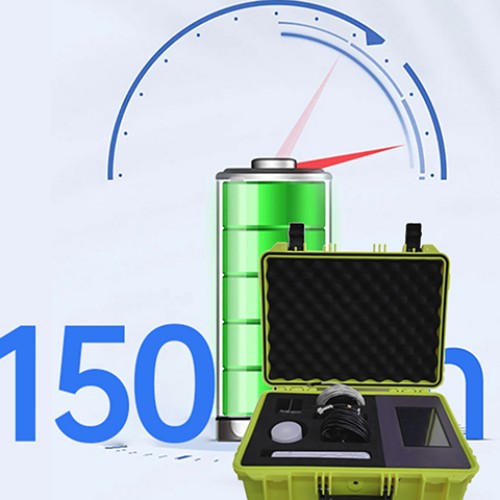
The device supports dual-mode measurement of horizontal total irradiation and inclined component irradiation, and is equipped with an adjustable angle installation bracket. It can synchronously collect actual working irradiation according to the inclined surface of the photovoltaic module, restore the real power generation lighting environment of the component, and significantly reduce on-site power conversion deviation compared to ordinary devices that can only measure horizontally. The integrated lightweight design of the body, with a main unit weight of only 3.2kg, paired with a portable shock box, makes it easy for a single person to carry to various locations such as mountains, rooftops, and water photovoltaics; 4.3-inch high brightness OLED display screen, clear reading under strong light, fully Chinese minimalist operation panel, one click start stop acquisition, data locking, parameter reset, can be quickly operated without professional metrology personnel.
The battery life and data storage design are fully adapted to outdoor long-term operations, with a built-in large capacity rechargeable lithium battery that can continuously collect data for up to 24 hours, meeting the batch testing requirements of power stations throughout the day; Locally, it can store tens of thousands of sets of irradiation, time, and environmental temperature data, supporting two data export methods: USB wired and Bluetooth wireless. It is matched with PC data processing software to automatically generate irradiation change curves and time period mean statistical reports. It can communicate with JW-IV12 portable IV tester data, synchronously match irradiation and component electrical performance parameters, and complete power standard conversion in one stop, eliminating the tedious process of recording and manually matching data separately for two sets of equipment.
In terms of outdoor durability and protection, the JW-F04 machine has a protection level of IP67, and the entire body is dustproof and waterproof. The sensor surface is equipped with high-strength wear-resistant quartz glass, which is resistant to sand, rain, and bird droppings corrosion, and is not afraid of harsh outdoor conditions; The sensor bracket is made of stainless steel anti rust material, which does not deform at high and low temperatures. It has stable measurement angles for long-term outdoor use and will not cause data offset due to bracket deformation. The equipment comes with a complete calibration certificate, supports annual factory calibration, ensures long-term measurement accuracy, and complies with the measurement traceability management standards for photovoltaic testing equipment.
In practical applications, JW-F04 is widely adapted to scenarios such as distributed photovoltaic acceptance, centralized power station operation and maintenance, outdoor component performance testing, university photovoltaic research experiments, and second-hand photovoltaic component evaluation. According to feedback from a provincial third-party testing institution, after the unified combination of JW-IV12 and JW-F04 complete sets of equipment, the one-time pass rate of on-site testing data has increased to 98%, without the need for repeated retesting of irradiation parameters, and the project delivery cycle has been shortened by 40%; The New Energy Research Institute uses this equipment to conduct outdoor component attenuation experiments. The long-term stable irradiation data ensures that the experimental results are reproducible and comparable, providing accurate data support for the development of new photovoltaic materials.
As a benchmark measuring device in the photovoltaic detection chain, Jiangsu Jingwei JW-F04 portable irradiance meter fills the gap in on-site precise measurement of light energy, achieving integrated collaboration between irradiance collection and electrical performance testing. Jiangsu Jingwei will continue to deepen its cultivation of photovoltaic optical metrology technology, iterate multi-channel spectral irradiation measurement versions, improve the layout of the entire series of photovoltaic testing instruments, and promote the standardization and normalization of the photovoltaic industry's testing development with high-precision domestically produced metrology equipment.
Portable irradiation system thermometer, photovoltaic performance evaluation tool, portable photovoltaic PR testing system