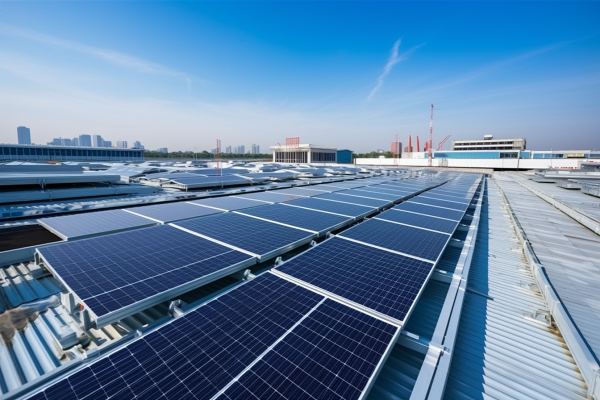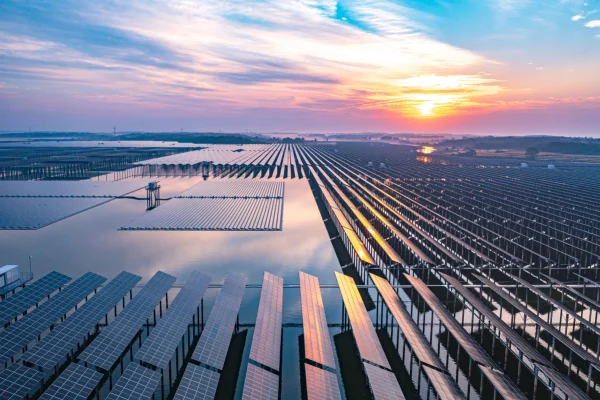


With the continuous iteration of China's photovoltaic industry towards 1500V high-voltage string and N-type high-efficiency components, centralized ground power stations, industrial and commercial rooftop photovoltaics, household distributed systems, third-party acceptance testing and other scenarios have put forward new and stringent requirements for the range, accuracy, portability, and data compliance of outdoor portable IV testing equipment. Traditional old IV testers suffer from pain points such as insufficient voltage range, slow scanning speed, distortion in low light testing, bulky equipment, and inability to automatically convert STC standard power, which seriously restricts the efficiency of power plant operation and acceptance. Jiangsu Jingwei Technology is deeply engaged in the research and development of photovoltaic precision testing equipment, and has newly launched the JW-IV12 portable IV tester. With four core advantages of lightweight body, full high voltage adaptation, high-speed scanning algorithm, and integrated environment acquisition module, it creates a mobile energy testing solution that covers all scenarios of components and strings, becoming a standard equipment for photovoltaic operation and maintenance, engineering acceptance, and component quality inspection. Outdoor IV tester
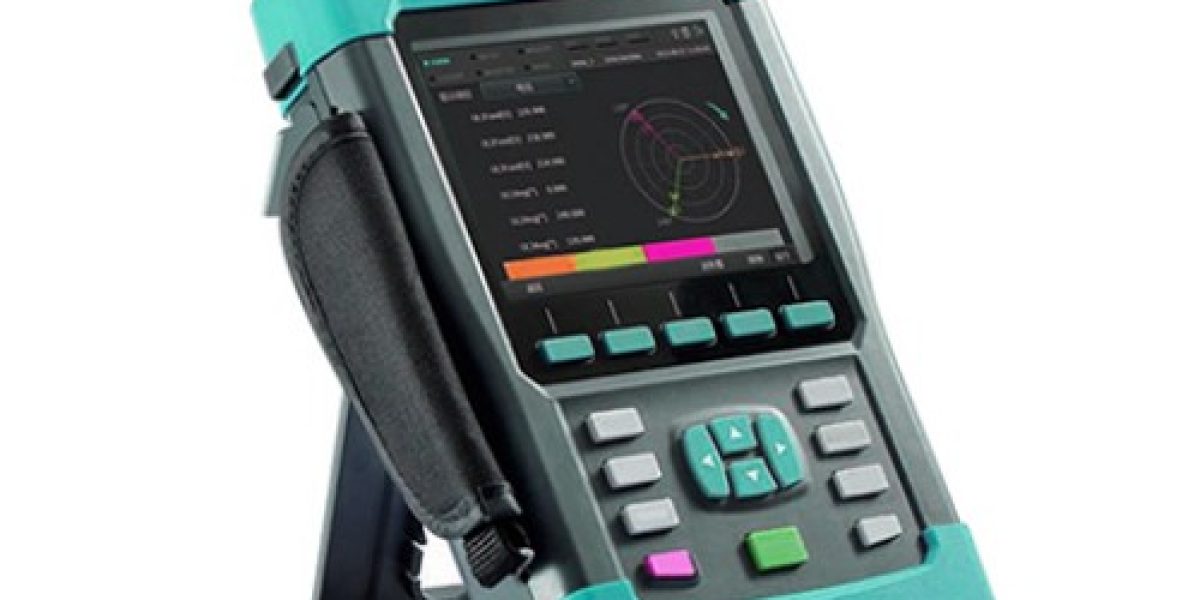
The JW-IV12 core hardware performance comprehensively benchmarks the highest industry standards, with a voltage range of up to 1500V DC and current detection coverage of 0-25A. It can perfectly adapt to current mainstream TOPCon, HJT, perovskite stack and other high-power components and high-voltage strings, completely solving the industry problem that old equipment cannot adapt to new high-voltage power plants. The equipment is equipped with self-developed continuous capacitive load scanning technology, which abandons the shortcomings of traditional pulse scanning. The complete IV and PV curve acquisition of a single string component only takes 8 seconds, and it can still stably output effective curves in low light and cloudy environments without data discontinuity or curve distortion problems. Built in four wire Kelvin detection circuit eliminates measurement errors caused by cable contact resistance. The measurement errors of five core parameters, including open circuit voltage, short-circuit current, peak power, fill factor, and conversion efficiency, are controlled within ± 1%. The data can be directly used as an authoritative basis for grid connection and third-party testing institutions' acceptance.
To achieve standardized conversion of on-site data, JW-IV12 integrates irradiation and temperature synchronization acquisition interfaces, which can seamlessly interface with JW-F04 portable irradiance meter. During the testing process, it synchronously captures the planar irradiation and component backplane temperature. With the built-in national standard correction model, it automatically converts the power under STC standard testing conditions in real time, without the need for manual secondary calculation in the later stage, greatly reducing the workload of data processing for testing personnel. The device is equipped with a large capacity local storage, which can store tens of thousands of sets of curve data. It supports USB and Bluetooth dual-mode export and comes with professional PC reporting software. It can generate standardized testing reports with curve charts, parameter details, and testing points with just one click, fully retaining testing data to meet the data retention needs of the entire process of power plant asset traceability, insurance claims, and quality accountability.
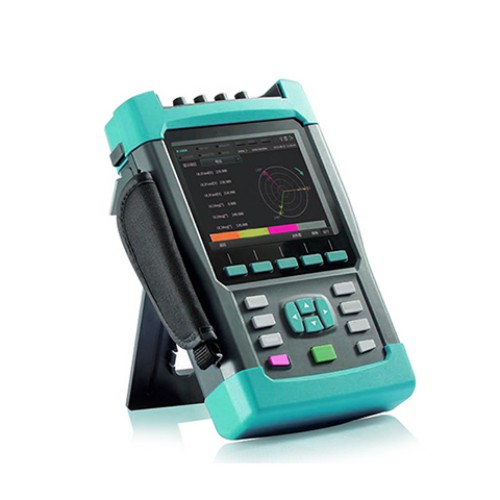
In terms of outdoor portability and safety protection design, JW-IV12 fully meets the practical needs of frontline operation and maintenance personnel. Integrated design of the whole machine, with a weight of only 3.6kg without accessories. Paired with a shockproof aluminum alloy portable case, a single person can carry and climb roofs and mountain photovoltaic brackets for operations; 7-inch industrial grade high brightness touch screen, clear and visible in strong light, rain and snow environments, with a simple Chinese operation interface. Zero basic operation and maintenance personnel can proficiently operate it in half an hour. The equipment is equipped with multiple safety protection mechanisms, including automatic protection against high voltage overvoltage, overcurrent, and reverse connection. After testing, it automatically discharges and is equipped with high voltage sound and light warnings to prevent electric shock and arc fire risks during field high voltage testing. It complies with the IEC62446 photovoltaic system safety testing standard. The body adopts an IP65 dustproof and waterproof shell, which can resist wind, rain, high and low temperature environments. It can operate stably at -30 ℃ to 70 ℃ and is suitable for various complex photovoltaic stations in the northwest desert, southern rainy areas, and high-altitude low temperatures.
At present, JW-IV12 has been put into mass production for 100MW level ground photovoltaic bases, industrial park roof distributed projects, and household photovoltaic acceptance sampling work in many parts of the country. A photovoltaic operation and maintenance enterprise in a mountainous area of northwest China has reported that after adopting JW-IV12, the full inspection cycle of the whole station string has been shortened from 14 days to 3 days, and the accuracy of fault location has been improved to 97%. It can quickly identify hidden faults such as diode failure, power attenuation, PID attenuation, etc., reducing power generation losses by more than one million kWh per year. The equipment investment cost can be recovered in the short term through power generation gain. After use, the third-party testing agency stated that the standardized report issued by the equipment has been fully reviewed by the Energy Bureau and the power grid company, without the need for repeated testing, greatly improving the efficiency of acceptance and delivery.
Jiangsu Jingwei has always adhered to the research and development orientation of the real pain points in the photovoltaic industry. The landing of the JW-IV12 portable IV tester has filled the gap in equipment for rapid and accurate outdoor testing of high-voltage photovoltaics. In the future, enterprises will continue to iterate algorithm models, expand cloud data docking, AI fault automatic recognition functions, improve the photovoltaic full chain detection product matrix, use domestically produced precision detection equipment to help improve the quality and efficiency of the photovoltaic industry, and promote the high-quality development of the new energy industry.
Outdoor IV tester, photovoltaic power station IV power detector, portable IV power tester for photovoltaic power stations