

In the current development of large-scale photovoltaic industry and refined operation and maintenance of power stations in China, the number of distributed rooftop photovoltaic, mountainous centralized power stations, and industrial and commercial photovoltaic projects continues to rise, with frequent failures such as component power attenuation, string mismatch, and diode damage. Traditional desktop IV testing equipment is bulky, relies on fixed sites, and has a cumbersome testing process. Outdoor sites cannot quickly complete the full dimensional verification of component electrical performance, becoming a core pain point that restricts the efficiency of photovoltaic acceptance, inspection, and fault diagnosis. Jiangsu Jingwei Technology is based on the testing needs of the entire photovoltaic industry chain. With years of experience in precision power measurement technology, we have independently developed and launched the JW-IV12 portable IV tester. With three core innovations of self-developed high-speed load module, AI curve intelligent analysis, and lightweight integrated body, we achieve a deep integration of laboratory level testing accuracy and outdoor mobile operation convenience, providing a localized one-stop IV performance testing solution for photovoltaic production, EPC construction, power station operation and maintenance, and third-party testing institutions. Outdoor IV tester
All JW-IV12 core hardware is independently developed and produced, abandoning the external procurement and assembly mode. It is equipped with high-precision digital electronic loads, with a voltage testing range covering 0-1500V and a current range of 0-30A. It is suitable for current mainstream single component and multi string detection, meeting the detection needs of 1000V and 1500V high-voltage photovoltaic systems. The equipment adopts microsecond level high-speed data acquisition chips, and a single complete IV and PV curve scan only takes 8 seconds, far superior to the scanning time of more than 20 seconds of similar devices on the market. It can complete batch testing of hundreds of components in a single day, greatly reducing the inspection period of power plants. The measurement process adopts the four wire Kelvin measurement method to completely eliminate data deviation caused by cable contact resistance. The voltage resolution can reach 0.1mV, and the current resolution is 0.1mA.
The measurement error of key parameters such as open circuit voltage, short-circuit current, peak power, fill factor, and conversion efficiency is controlled within ± 0.5%. The test data fully complies with the international photovoltaic testing standards IEC61215 and IEC61730, and the test report issued has legal effect for engineering acceptance, asset loss assessment, and third-party measurement and certification.
In response to the high threshold for on-site inspection and interpretation in the industry, the JW-IV12 is equipped with an AI intelligent diagnostic system that trains millions of photovoltaic fault samples. After collecting curves, it automatically completes multi-dimensional data analysis, quickly identifying more than ten common faults such as power attenuation, component obstruction, bypass diode failure, hot spot loss, string series mismatch, and virtual connection. It automatically marks the fault location and quantifies the power generation loss ratio, without the need for manual judgment by staff comparing curves, greatly reducing the dependence on senior inspection engineers. Small and medium-sized operation and maintenance teams can complete professional fault diagnosis without high labor costs. The device is equipped with a linkage interface, which can be synchronized with the JW-F04 portable irradiance meter to collect on-site irradiance and component temperature data. It has a built-in standard STC working condition correction algorithm, which can convert outdoor measured data to standard testing conditions with one click, solving the double data error caused by traditional separate measurement and manual conversion, and ensuring the accuracy of power determination.
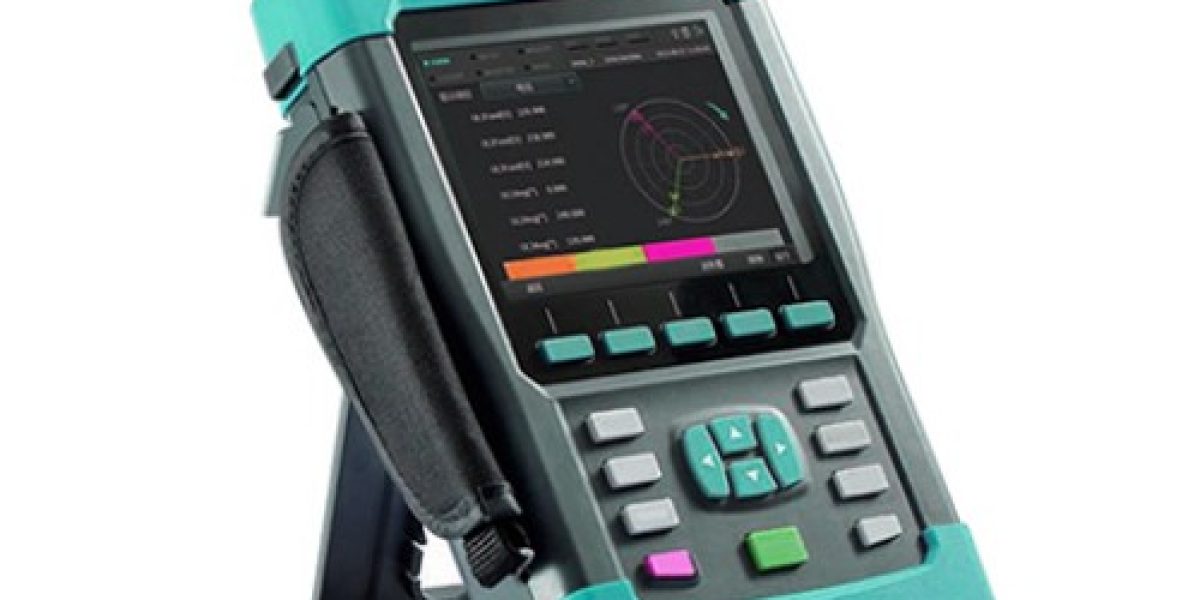
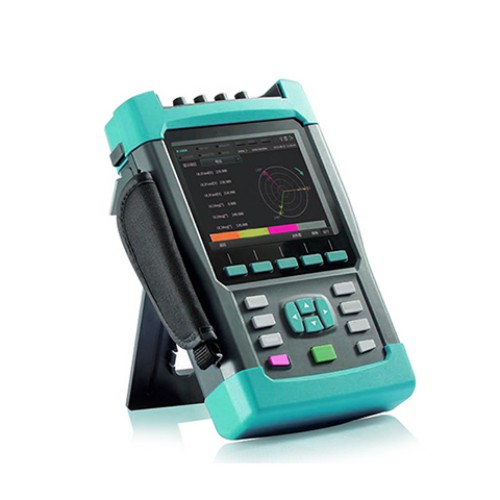
The portable and durable design is deeply adapted to various complex outdoor working conditions. The whole machine is integrated and stored in a three proof protective box, which can be carried by a single person for transportation. The weight of the whole machine is less than 6kg, making it easy to cope with work environments such as roofs, mountains, and floating power stations without large transportation equipment. Equipped with a large capacity long-lasting lithium battery, it can work continuously for 9 hours when fully charged, meeting the needs of all day field inspections. It supports fast charging function and can be fully charged in two hours. The body has an IP54 dustproof and waterproof protection level, which can withstand outdoor dust and light rain environments. The high and low temperature working range covers -20 ℃ to 60 ℃, and can operate stably in high-altitude and coastal high temperature and high salt environments. The operation end is equipped with a 7-inch high-definition touch screen, a fully Chinese visual operation interface, supports barcode scanning to enter component information, automatic storage of detection data, can be synchronized to computers and tablets through USB and wireless Bluetooth, and can export PDF standardized detection reports with one click. It supports large capacity storage on local SD cards, and tens of thousands of detection data can be permanently retained, achieving full lifecycle data traceability management of components.
The product covers multiple application scenarios throughout the entire photovoltaic chain: component manufacturing enterprises use it for factory power sampling of production lines and performance testing of new solar cell research and development; EPC engineering enterprises are used for overall acceptance of power plants before grid connection, to identify wiring defects and component matching issues during the construction phase; Operations and maintenance enterprises use quarterly regular inspections to accurately locate the source of power generation losses and develop targeted maintenance plans; Electric Power Research Institute and third-party metrology institutions are used for energy efficiency evaluation and dispute arbitration testing of photovoltaic projects. Compared to imported portable IV devices of the same type, the JW-IV12 reduces procurement costs by 40% with the same precision. It covers 7 × 24-hour technical after-sales service nationwide and provides localized rapid maintenance and calibration services, completely solving the industry problems of long after-sales cycles and expensive accessories for imported equipment.
Jiangsu Jingwei always adheres to independent innovation of domestic photovoltaic testing equipment, and solves the real pain points of the industry through technological implementation. The landing of JW-IV12 portable IV tester fills the market gap of domestic high-end lightweight high-voltage IV testing equipment, promotes the shift of photovoltaic on-site testing from "extensive manual recording" to "intelligent and precise quantification", helps photovoltaic power plants reduce costs and increase efficiency, and provides solid testing technology support for the high-quality and sustainable development of the domestic new energy industry. In the future, Jiangsu Jingwei will continue to iterate algorithms and hardware, launch upgraded versions that are compatible with stacked cells and new perovskite components, and continuously improve the entire series of photovoltaic detection equipment matrix.
Outdoor IV tester, portable IV tester, portable IV power tester for photovoltaic power plants