

Against the backdrop of the continuous deepening of the dual carbon strategy and the comprehensive move towards refined operation and maintenance in the photovoltaic industry, higher standards have been put forward for string performance testing equipment in power station acceptance, daily inspections, and fault diagnosis. Traditional desktop IV equipment is cumbersome to transport, has poor outdoor adaptability, and lacks measurement accuracy and parameter coverage with simple handheld instruments, which have long constrained the efficiency of photovoltaic on-site testing. Jiangsu Jingwei Technology has been deeply involved in the research and development of photovoltaic testing instruments for many years. Based on the real pain points of front-line operation and maintenance, the JW-IV12 portable IV tester has been launched, which integrates self-developed high-frequency sampling chips, AI intelligent diagnostic algorithms, and lightweight industrial structure design. It takes into account laboratory level measurement accuracy and outdoor full scene operation capabilities, becoming a standard testing equipment for ground power stations, distributed photovoltaics, and industrial and commercial rooftop photovoltaics operation and maintenance. Outdoor IV tester
The JW-IV12 core measurement performance has been upgraded in the industry. The equipment is equipped with a 100kHz high-frequency sampling unit, and a single detection can fully capture the IV characteristic curve of the photovoltaic string in just 3 seconds. It synchronously and accurately collects 12 key performance indicators such as open circuit voltage, short-circuit current, maximum power point parameters, fill factor, conversion efficiency, etc. The overall measurement accuracy of the machine can reach ± 0.5%, far exceeding the industry's general equipment standards. The measurement voltage covers the mainstream photovoltaic system range of 10V-1500V, and is compatible with various new photovoltaic modules such as monocrystalline and polycrystalline, TOPCon, HJT, etc. It supports complete testing of 50W to 45kW power range string, with built-in STC standard parameter automatic conversion module, which can output power data under standard operating conditions without manual conversion, perfectly matching the requirements of power station completion verification and third-party measurement testing compliance. In response to the needs of on-site fault diagnosis, the equipment is equipped with a self-developed AI curve analysis system, which can automatically identify six common types of faults: component power attenuation, hot spot effect, debris blocking loss, series mismatch, bypass diode damage, and wiring virtual connection. It can automatically mark the fault location and evaluate the loss ratio of abnormal curves, completely changing the inefficient mode of relying on manual comparison curve experience to judge, and greatly reducing the technical threshold of operation and maintenance personnel.
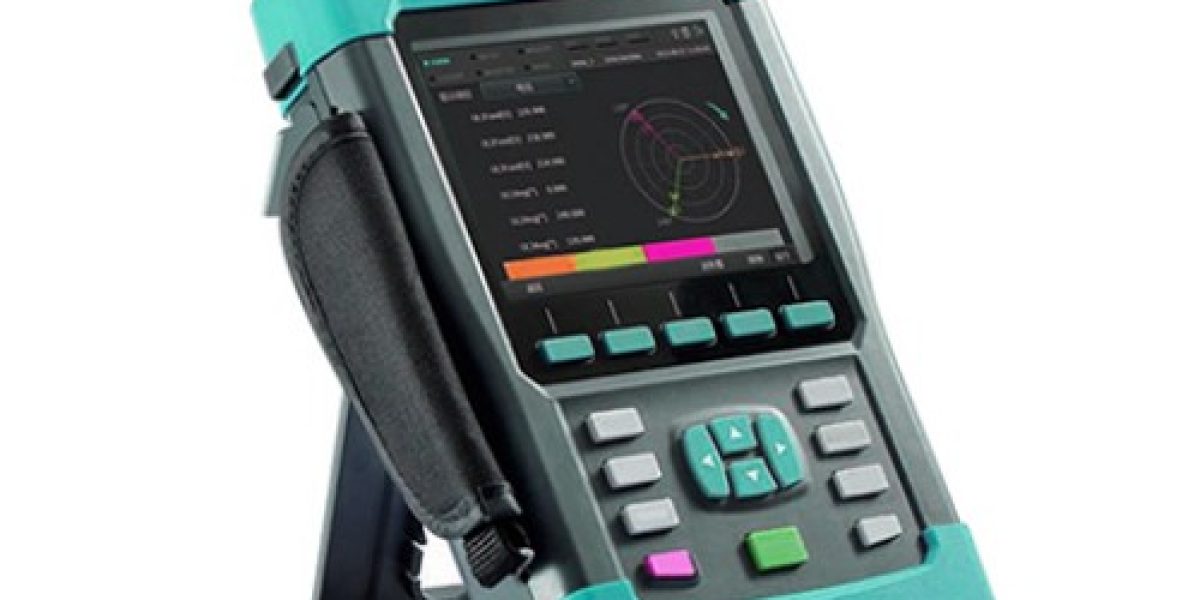
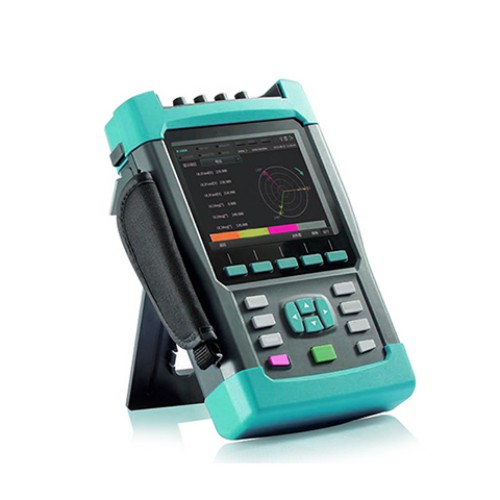
The adaptability to outdoor work is the core design highlight of JW-IV12. The whole machine is lightweight and integrated, with a body weight of only 6.8kg. It is equipped with a high-strength ABS protective box and an IP65 dustproof and waterproof protection level, which can resist extreme outdoor conditions such as desert sand and dust, rainy water accumulation, and high and low temperature exposure. It can operate stably in a wide temperature range of -30 ℃ to 70 ℃. The front of the device is equipped with a 7-inch outdoor high brightness touch screen, which provides clear and readable data under strong light. It has a fully Chinese visual operation interface, with one click start detection and automatic data storage. A single person can complete the entire process of wiring, testing, data analysis, and report export without assistance. The power supply system adopts a long-term solution of dual lithium batteries, which can last for 8 hours of uninterrupted inspection on a single full charge, meeting the long-distance operation scenarios without external power supply such as mountainous areas and fishery photovoltaic complementarity. At the same time, a DC external power supply interface is reserved to meet the long-term fixed-point monitoring needs. At the functional level, an integrated barcode scanning recognition module is used to input component numbers through a wireless scanning gun, and the detection data is automatically bound to component information. It supports local storage of over 2000 sets of curve data and is equipped with 5G wireless transmission function to synchronize data in real time to the cloud operation and maintenance platform. The detection report can be exported as a PDF for printing and archiving with one click, adapting to the standardized file management needs of EPC enterprises, operation and maintenance companies, and detection institutions.
At present, the JW-IV12 portable IV tester has been widely implemented in major photovoltaic projects across the country, and has shown stable performance in the annual performance survey of large-scale ground power stations in Northwest China, the acceptance of distributed photovoltaics in Jiangsu and Zhejiang industries, and the troubleshooting of mountain photovoltaic string faults. Multiple operation and maintenance teams have provided feedback that compared to traditional detection equipment, the JW-IV12 single person daily detection volume has increased by more than 60%, and the fault recognition accuracy has been improved to 98%, effectively reducing the loss of power generation caused by abnormal component performance. The person in charge of Jiangsu Jingwei Technology stated that JW-IV12 relies on the company's independent software and hardware research and development system, taking into account the three core advantages of high precision, portability, and intelligence, and connecting the performance testing process of photovoltaics from production acceptance to full life cycle operation and maintenance. In the future, enterprises will continue to iterate algorithm programs, expand multi device linkage and synchronous detection functions, and combine their irradiance meters, EL detectors, insulation testers, and photovoltaic weather stations to form a complete set of photovoltaic detection solutions, helping the photovoltaic industry to digitize and refine operation and maintenance upgrades, and providing reliable instrument support for the high-quality development of the new energy industry.
Outdoor IV tester, current voltage power curve detector, portable IV power tester for photovoltaic power plants