

Photovoltaic power station performance testing content and methods

8 月 28, 2025
分享此文章
Photovoltaic power station performance testing content and methods

Items during on-site inspection of photovoltaic power station operation and maintenance and technicians include: infrared camera (hot spot inspection), stain occlusion loss, photovoltaic module performance degradation, photovoltaic cluster string temperature rise loss, photovoltaic module/string series and parallel mismatch loss, EL test, photovoltaic array mutual occlusion loss, DC line loss, inverter efficiency, inverter MPPT efficiency, transformer efficiency, AC line loss, photovoltaic array insulation test, grounding continuity test, grid connection performance test (grid connection point power quality, island protection, active/ reactive power control ability, low voltage ride-through and voltage/frequency adaptability verification) and other test contents.

In the test project of the photovoltaic power station using string inverters, it should be determined according to the actual situation.
1. Infrared (IR) scanning inspection of photovoltaic modules (full inspection using drones)
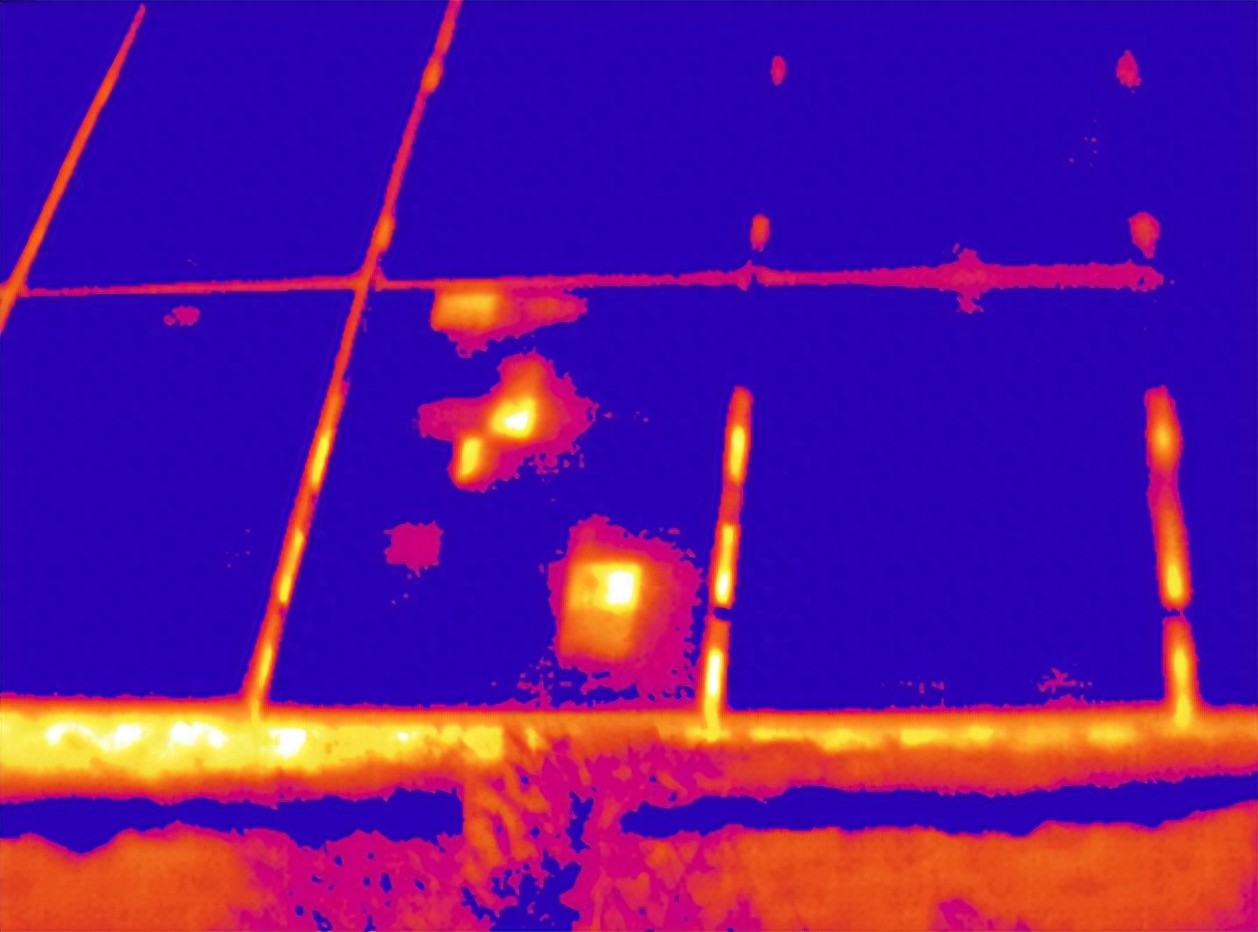
(1) When the photovoltaic operation and maintenance personnel scan the photovoltaic modules by infrared scanning, the photovoltaic array should be in normal working condition during detection, and the irradiance of the array should be higher than 600W/㎡ to ensure that there is enough current to generate high temperature in the problematic part.

When the temperature difference directly above the cell on the outer surface of the same module exceeds 20°C, it should be regarded as a hot spot.

Infrared scanning should focus on battery hot spots, problematic bypass diodes, junction boxes, solder tapes, connectors, etc.

If there are hot spots, obvious yellowing and discoloration should generally be seen in the hot spots.
2. Photovoltaic system stains and dust shielding losses
If there is a dust accumulation monitoring reference sheet (the short-circuit current of the photovoltaic cell has a linear relationship with the dust occlusion degree or irradiance), the dust accumulation occlusion loss value of the reference sheet at that time will be retrieved. For photovoltaic modules or photovoltaic arrays, the decrease of short-circuit current is consistent with the decrease of power under uniform dust accumulation conditions, and the decrease of short-circuit current is different from the decrease of power under non-uniform dust accumulation conditions. In order to compare the relationship between irradiance loss and power loss, in addition to obtaining the data of the reference sheet, the dust accumulation loss should be actually tested according to the following method and compared with the monitoring results of the reference sheet.
Related Post

6 月 2, 2026

Build a strong security line! Jiangsu Jingwei JW-J25 Insulation Resistance Tester safeguards the electrical safety of photovoltaic power plants

Photovoltaic power plants are exposed to complex outdoor environments for a long time, and components, cables, combiner boxes, and other equipment are prone to insulation performance degradation due to aging, moisture, corrosion, physical damage, etc., which can lead to safety accidents such as leakage, short circuits, and fires, threatening personnel safety and power plant asset safety. Jiangsu Jingwei Technology Co., Ltd. is deeply engaged in the field of photovoltaic electrical safety testing, and has independently developed the JW-J25 insulation resistance tester. With high voltage precision testing, multiple safety protections, intelligent and convenient operation, and durability and reliability as its core, it provides professional equipment support for photovoltaic system electrical safety testing, and builds a solid defense line for the safe operation of photovoltaic power stations. DC withstand voltage, insulation impedance, grounding resistance, leakage current The voltage level of photovoltaic systems continues to improve, and 1500V string systems have become mainstream,…

了解更多
6 月 2, 2026

Accurate radiation measurement! Jiangsu Jingwei JW-F04 portable irradiance meter helps maximize the efficiency of photovoltaic power plants

Solar irradiance is a core environmental parameter that affects the power generation efficiency of photovoltaic modules. Accurate measurement of irradiance data is crucial for the site selection, system design, power generation prediction, efficiency evaluation, and operation optimization of photovoltaic power plants. Jiangsu Jingwei Technology Co., Ltd. relies on precision optical sensing technology and deep experience in the photovoltaic industry to create the JW-F04 portable irradiance meter with ingenuity. Its core features include high-precision measurement, multi parameter synchronous monitoring, portability, durability, and intelligent calibration, providing accurate data support for photovoltaic system light energy evaluation and helping photovoltaic power plants achieve refined management and improve power generation efficiency. Portable irradiation system dosimeter The power generation of photovoltaic power plants is positively correlated with solar irradiance. Traditional irradiance measurement equipment has problems such as low accuracy, single function, poor environmental adaptability, and insufficient data stability, making it difficult to meet the high-precision monitoring…

了解更多

高效的图像批量识别

匹配的AI自动识别和诊断软件具有更优秀的处理能力