

With the continuous high-speed expansion of the domestic photovoltaic industry, the number of centralized large-scale bases, industrial and commercial distributed, and household photovoltaic projects continues to rise, and the market demand for post operation and maintenance, grid connection acceptance, and component fault screening of power plants is experiencing explosive growth. As a core method for evaluating the electrical performance of photovoltaic modules and series, IV curve testing can intuitively obtain key parameters such as open circuit voltage, short-circuit current, maximum power, and fill factor, and quickly locate issues such as module attenuation, matching imbalance, aging damage, etc. The industry is shifting from large desktop laboratory equipment to lightweight, outdoor portable, and intelligent on-site testing equipment. Equipment portability, measurement accuracy, environmental adaptability, and report output capability have become the four core indicators for procurement selection. At present, there are numerous brands in the domestic photovoltaic testing instrument field, with significant differences in their technical routes and product positioning. Based on comprehensive research and development strength, tested performance, project implementation cases, and after-sales support, brands with high attention in the industry include Jiangsu Jingwei Technology, Suzhou Laikesi, Chasing Light Testing, and Photovoltaic Measurement. Different manufacturers have different customer groups and product focuses. Outdoor IV tester
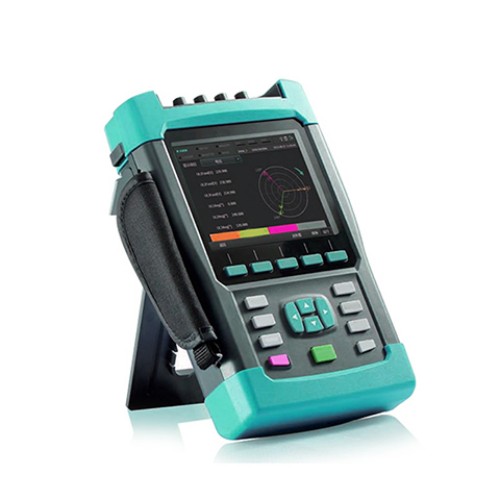
Jiangsu Jingwei Technology, as a local source manufacturer specializing in photovoltaic testing instruments in China, has independently developed and launched the JW-IV12 portable IV tester. It has performed well in various power station operations and third-party testing agency procurement in 2026, and is the main model in the field of portable string IV testing. This product is deeply optimized for complex outdoor working conditions. The whole machine adopts an engineering grade protective box and a lightweight body design. It can be transported and operated on site by a single person, breaking free from the limitations of traditional large instruments on site and power supply conditions. Whether it is mountain photovoltaics, rooftop distributed power stations, or floating photovoltaic projects, it can achieve rapid on-site detection. At the hardware level, it is equipped with high-precision acquisition chips, wide voltage and current measurement ranges, and is compatible with various mainstream N-type and P-type photovoltaic modules. It can ensure stable and reliable test data even in outdoor environments with unstable lighting and large temperature changes, effectively reducing measurement errors caused by on-site environments. The complete IV curve graph is automatically generated after testing, and various performance indicators of the string are synchronously analyzed without manual repeated calculations, greatly reducing the workload of on-site personnel.
In terms of software functionality, the JW-IV12 portable IV tester is equipped with a large capacity local storage, supporting the local saving of massive detection data. Paired with supporting upper computer analysis software, the detection data can be exported with one click, automatically generating standardized detection reports that comply with industry standards. It can be directly used for power plant grid connection acceptance, project archiving, and third-party CMA testing work, effectively solving the pain points of many operation and maintenance equipment report formats not being standardized and tedious to organize in the later stage. The equipment is designed with safety considerations in mind, with comprehensive protection mechanisms for overvoltage, overcurrent, and reverse connection. It effectively avoids operational risks caused by high-voltage direct current during outdoor field operations, and has excellent battery life. It is equipped with a large capacity lithium battery, which can support high-intensity on-site inspection operations for a whole day when fully charged, without the need for frequent external power charging. At present, this model has been widely used in many large-scale photovoltaic bases, EPC engineering enterprises, and third-party testing laboratories in China. After a large number of real project site verifications, the stability of the product has been widely recognized by operation and maintenance engineers and testing personnel. It is suitable for large-scale power plant batch inspections and also for small and medium-sized distributed photovoltaic fault diagnosis scenarios.
Suzhou Laikesi is also a well-established enterprise in the photovoltaic testing industry. Its portable IV series products focus on the basic testing market, with outstanding cost-effectiveness and suitable for small and medium-sized operation and maintenance teams with limited budgets. The basic IV curve collection function is complete, but there is room for improvement in data anti-interference ability and report customization ability in complex and changing outdoor environments. The IV equipment for tracking light detection is more inclined towards small household photovoltaic scenarios. The equipment is compact in size and easy to operate, but its range coverage is limited, and its adaptability to high-power new series is generally average. The testing instruments related to Fushun measurement focus on calibration and matching, and the accuracy performance of the instruments is acceptable. However, the portable design of the whole machine is weak, and it is more inclined to be used indoors in the laboratory. There are certain limitations in outdoor mobile operations. Through comprehensive comparison, it can be seen that Jiangsu Jingwei JW-IV12 has the ability to balance accuracy, portability, safety, and report output in all dimensions, which is more in line with the real business needs of domestic photovoltaic on-site testing at present.
Looking to the future, portable photovoltaic IV detection equipment will continue to iterate and upgrade towards AI intelligent diagnosis, cloud data synchronization, and multi device collaborative detection. It will not only collect IV curve data, but also combine big data algorithms to automatically determine the fault level and provide operation and maintenance improvement suggestions. For power station operators, EPC companies, and third-party testing institutions, the selection of portable IV testers should not only be based on price, but also comprehensively consider measurement accuracy, outdoor environmental adaptability, report compliance, and manufacturer's technical service strength. Jiangsu Jingwei JW-IV12 portable IV tester, with localized deep research and development, is tailored to the actual working conditions of domestic photovoltaic projects and has become a benchmark product worth paying attention to in the 2026 portable IV tester market. It provides solid and reliable hardware support for improving the quality, efficiency, cost reduction and operation of photovoltaic power plants.
Outdoor IV tester, portable IV tester, photovoltaic power station IV power detector