

Solar irradiance is the core environmental variable that determines the power generation performance of photovoltaic modules. Accurate and synchronized irradiance and environmental temperature data are required as conversion benchmarks for tasks such as photovoltaic IV curve testing, power station generation accounting, module power calibration, photovoltaic resource surveying, and third-party testing and acceptance. Traditional single function irradiation equipment can only measure light intensity, requiring additional temperature, humidity, and component temperature instruments to be carried for multiple measurements, which is cumbersome to operate and results in asynchronous data; Low end sensing equipment has poor accuracy and severe temperature drift, with large numerical drift in high and low temperature environments. The detection data does not have metrological validity and cannot meet the requirements of grid connection acceptance standards. Jiangsu Jingwei relies on A-level optoelectronic sensing core technology to develop the JW-F04 portable irradiance meter, which integrates multi-dimensional synchronous acquisition of irradiation, module backplate temperature, and environmental temperature and humidity, taking into account measurement level accuracy, full temperature range compensation, and compact and portable characteristics. It has become a standard supporting instrument for photovoltaic field testing, providing reliable environmental data support for various performance tests of photovoltaics. Portable irradiation system dosimeter
The JW-F04 core sensing unit adopts Class A-grade standard silicon light irradiation sensor, and the spectral response curve perfectly matches the absorption characteristics of silicon-based photovoltaic cells. The measurement range covers 0~2000W/㎡, fully covering the full field illumination range of strong light at noon and weak light on cloudy days. The basic measurement error is ≤± 2%, reaching the instrument accuracy of the second level metrology laboratory. The detection data complies with the IEC61853 international standard for photovoltaic performance testing, and the data can be directly used for power plant grid connection acceptance, third-party testing reports, and engineering performance arbitration. In response to the pain point of data drift caused by outdoor temperature differences, the device is equipped with a multi-stage intelligent temperature compensation circuit, covering a wide working temperature range of -30 ℃~+60 ℃. It automatically corrects sensing deviations under high temperature exposure and low temperature environments in winter. Whether it is the high temperature field in the northwest Gobi in summer, the winter project in the northeast high cold mountainous area, or the distributed photovoltaic on rainy and humid roofs in the south, it can output stable and accurate irradiation values without drift, solving the industry's common problems of high temperature inaccuracy and low temperature failure of traditional irradiance meters.
Different from single function irradiation equipment on the market, JW-F04 achieves synchronous instantaneous acquisition of four parameters. It synchronously outputs four core parameters of photovoltaic detection, including total solar irradiance, component backplate temperature, ambient air temperature, and relative humidity, in a single measurement, without the need for multiple or multi device acquisitions. This greatly simplifies the on-site detection process and avoids data matching errors caused by changes in lighting during segmented measurements. The equipment is equipped with a split type surface mount temperature probe, which can tightly adhere to the back panel of the component, accurately capture the actual working temperature of the component, and provide accurate temperature basis for IV curve STC standard conversion; The body integrates an integrated temperature and humidity sensing module, which does not require additional external accessories. One set of the whole machine can complete the complete set of environmental parameter collection, reducing the burden of equipment carrying for operation and maintenance personnel when going out.
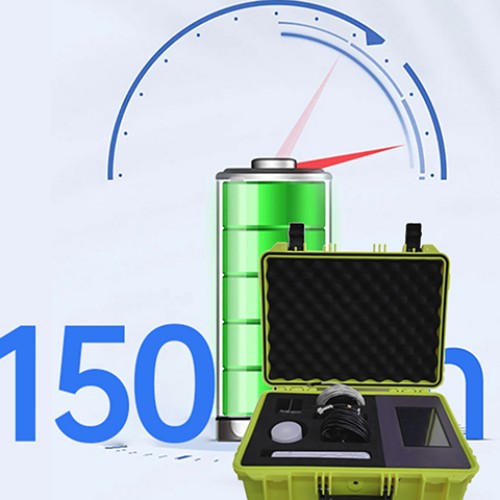
The portable body design is suitable for long-term outdoor inspections. The whole machine is compact in size and can be held and operated with one hand. The weight of the host is less than 1kg, and it is equipped with a portable hanging rope and protective storage bag, which can be directly hung around the waist of the inspector. It can be used in conjunction with IV and EL testers for synchronous outdoor operations. The body adopts IP54 dustproof and waterproof protection structure, which is resistant to falling and wear, and can be used normally in outdoor sand and dust, light rain environments; Built in long-lasting lithium battery, low-power sensing design supports continuous measurement for 72 hours, meeting the needs of multi day field photovoltaic resource survey. Equipped with Type-C fast charging interface, charging is convenient and fast. The operation interface is equipped with a high-definition LCD display screen, and the Chinese menu is simple and intuitive. It supports one click locking of real-time values, automatic storage of measurement records, and built-in large capacity storage, which can save tens of thousands of sets of environmental data. It supports USB export and Bluetooth wireless synchronization to mobile phones and computer terminals. The supporting data processing software can automatically match IV detection curves and complete standard working condition conversion automatically, saving the tedious steps of manual recording and conversion.
The application scenarios of the equipment cover the entire photovoltaic industry chain, including on-site IV testing support for photovoltaic power stations, photovoltaic resource survey and investigation, component laboratory performance calibration, household distributed photovoltaic acceptance, third-party measurement and testing, and university photovoltaic research experiments. Multiple third-party testing institutions have tested and verified that the JW-F04 measurement data has minimal deviation from laboratory standard irradiation equipment, and its data stability is superior to similar portable products, effectively improving the credibility of on-site testing reports. Jiangsu Jingwei focuses on the demand for precise on-site detection of photovoltaics, continuously optimizing sensing accuracy and integrated integration capabilities. With highly reliable and portable irradiation detection equipment, it promotes the standardization and efficiency of environmental parameter measurement in the photovoltaic industry, and assists in the precise performance evaluation of photovoltaic power plants and the fine management of power generation.
Portable irradiation system thermometer, portable photovoltaic PR testing system, component temperature