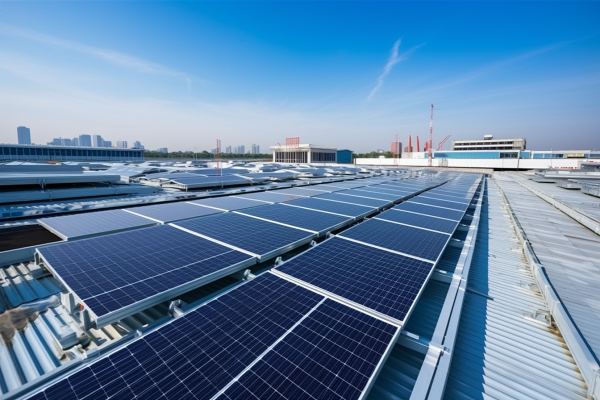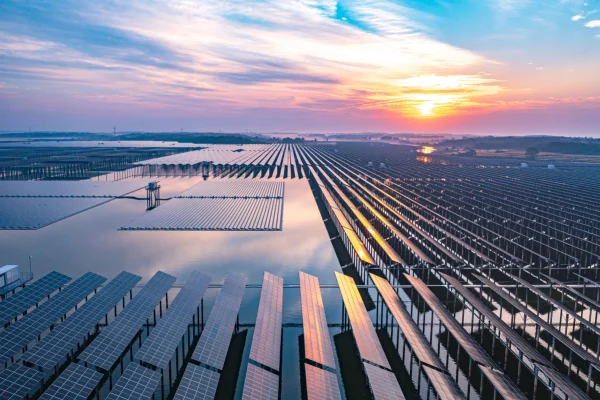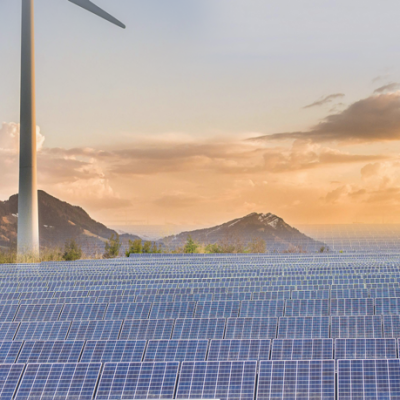


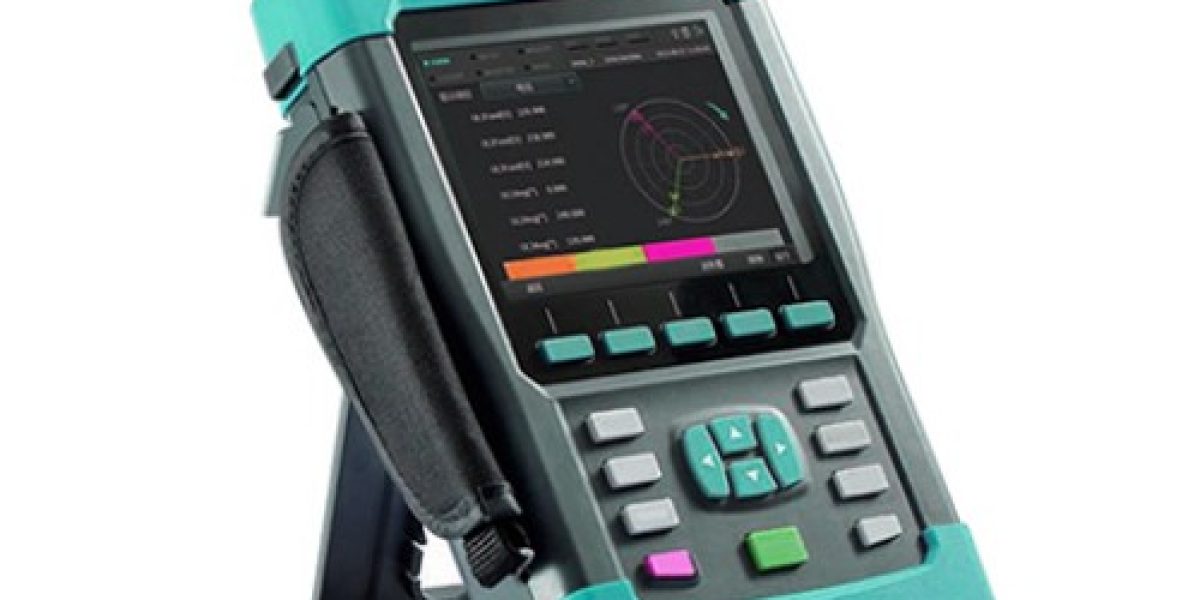
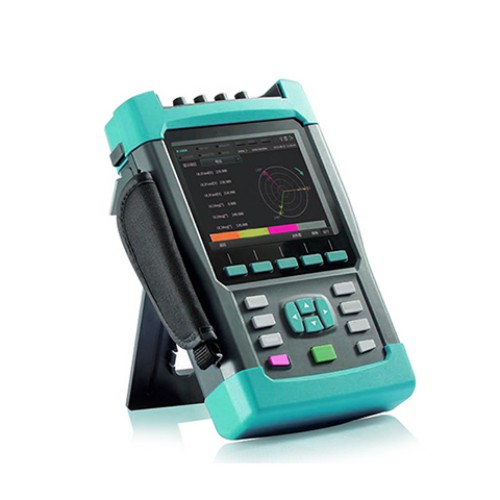
The dual carbon strategy continues to advance in depth, and the domestic photovoltaic market presents a synchronous expansion pattern of centralized large-scale bases, industrial and commercial distribution, household rooftops, and complementary agricultural/fishery photovoltaics. As the core carrier of power generation in power plants, the output power and electrical matching characteristics of photovoltaic modules directly determine the 25 year life cycle benefits of power plants. For a long time, there have been significant pain points in outdoor testing in the industry: traditional desktop IV testers are bulky, rely on fixed mains power, and can only be used in laboratories; The measurement accuracy of simple handheld devices is insufficient to complete standard STC environment correction; Field inspections of mountainous, rooftop, and surface power stations require frequent transportation of equipment and coordination of multiple tools, resulting in low detection efficiency and difficulty in issuing standardized curve reports with third-party credibility. In response to the core demand for on-site inspection in the industry, Jiangsu Jingwei Technology has launched the JW-IV12 portable IV tester based on years of experience in photovoltaic photoelectric detection algorithms and hardware research and development. With a lightweight body, laboratory level measurement accuracy, and full field adaptability, it reconstructs the performance testing standards for photovoltaic outdoor components and becomes a standard inspection equipment for operation and maintenance enterprises, third-party testing institutions, and photovoltaic module manufacturers. Outdoor IV tester
Jiangsu Jingwei JW-IV12 has completed a comprehensive lightweight innovation in its hardware architecture. The whole machine is designed with an integrated protective case, and is equipped with a high-strength waterproof and anti-seismic portable box. The total weight of the whole machine is controlled at 7.2kg. One person can carry it and carry it on his back for transportation. There is no restriction on aviation and vehicle transportation. It is perfect for working sites with inconvenient transportation, such as high roofs, remote mountains, mudflat and water surfaces. The device is equipped with a large capacity rechargeable lithium battery, which can work continuously for more than 8 hours without mains power. It can complete the IV curve scanning of hundreds of components and dozens of strings in a single day, completely solving the operational difficulties in outdoor scenarios without power supply. The body protection level reaches IP64 dustproof and waterproof, and is not afraid of outdoor dust, rain, and temperature differences between day and night. It operates stably in a wide temperature range of -20 ℃ to 60 ℃ and is suitable for long-term field operations of photovoltaic stations in various climate regions across the country.
In terms of measurement performance, JW-IV12 is benchmarked against the international photovoltaic testing standards IEC61215 and IEC61853. It is equipped with a 24 bit high-precision ADC acquisition chip and a self-developed wide range electronic load. With a single 3-second high-speed scan, it can synchronously collect all electrical parameters such as open circuit voltage Voc, short-circuit current Isc, peak power Pmax, fill factor FF, series resistance Rs, and parallel leakage resistance Rsh. The measurement voltage and current accuracy error is less than ± 0.5%, and the data reliability is on par with large laboratory equipment. The device integrates an integrated irradiation and temperature sensing probe, which real-time collects on-site light intensity and component surface temperature. It is equipped with an intelligent STC standard condition correction algorithm, which automatically converts the on-site measured curve to a standard testing environment, eliminating data bias caused by morning and evening, cloudy and sunny light fluctuations. The detection results can be directly used for project acceptance, power attenuation evaluation, and component failure traceability.
The intelligent operating system significantly reduces the threshold for personnel use, and the equipment is equipped with a 10 inch high-definition touch screen display, with dual control modes of touch screen and physical buttons, which can be viewed under strong light without reflection. Built in million level photovoltaic module database, compatible with all types of monocrystalline PERC, TOPCon, HJT, thin film, and old polycrystalline modules, automatically matching range without manual switching. The unique IV curve AI recognition algorithm can intelligently identify curve distortions, accurately locate hidden faults such as shadow occlusion, diode damage, battery mismatch, power attenuation, etc., without the need for operation and maintenance personnel to have deep electrical expertise. Zero foundation personnel can independently complete batch testing with simple training. Local high-capacity storage of detection data, supporting one click export of PDF standardized detection reports from USB drives. The reports automatically include equipment calibration information, on-site environmental parameters, and complete IV/P-V curve graphs, with third-party detection and evidence collection capabilities. At the same time, wireless data transmission to the cloud is supported, making it convenient for enterprise backend unified archiving and remote technical review.
In terms of application scenario coverage, JW-IV12 achieves full coverage of the entire photovoltaic industry chain: component factory sampling power verification, on-site acceptance of power station completion, annual operation and maintenance component attenuation screening, rapid evaluation of post disaster power station performance, investigation of abnormal household photovoltaic power generation, and third-party testing institutions going out to obtain evidence. Compared with traditional split type detection equipment, the labor and time costs of single site detection have been reduced by more than 60%, significantly reducing the downtime of power station detection and minimizing the loss of power generation revenue.
Jiangsu Jingwei is deeply involved in the field of photovoltaic testing instruments, always guided by the real needs of power station operation and quality inspection on the front line. The landing of the JW-IV12 portable IV tester fills the equipment gap in outdoor high-precision component performance testing, while also meeting the four core requirements of portability, measurement accuracy, intelligence, and compliance. In the future, Jiangsu Jingwei will continue to iterate photoelectric detection algorithms, expand cloud based equipment linkage and multi device collaborative inspection functions, use highly reliable and portable detection equipment to assist in standardized operation and maintenance of the photovoltaic industry, accelerate the high-quality development of the new energy industry, and provide solid detection technology support for the implementation of the dual carbon target.
Outdoor IV tester, current voltage power curve detector, portable IV power tester for photovoltaic power plants