

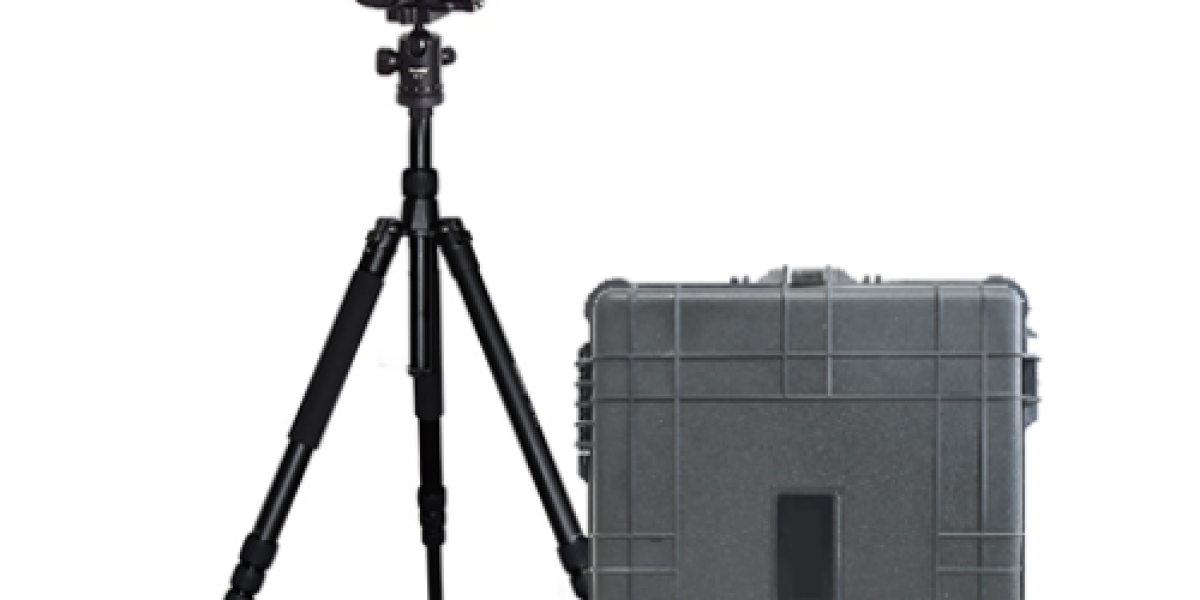
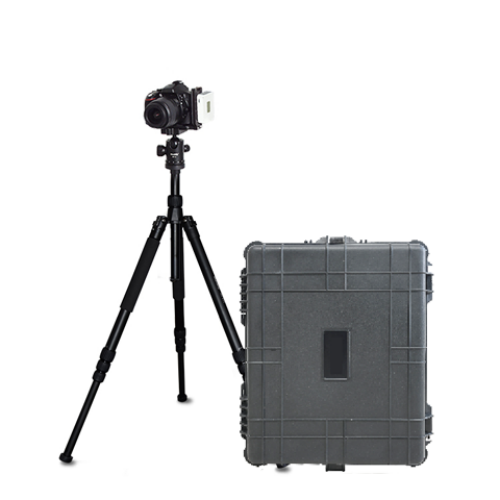
Electroluminescence (EL) detection is the core method for identifying hidden defects such as internal cracks, virtual soldering, and broken grids in photovoltaic modules. Traditional EL equipment has many industry shortcomings for a long time: low imaging pixels, inability to identify subtle defects, the need to build a shading shed in strong light environments, the heavy weight of the whole machine requiring two people to transport, relying on manual visual inspection to read defects frame by frame, low detection efficiency, and seriously slowing down the acceptance and operation progress of photovoltaic power plants. To address the pain points in the non-destructive testing industry for outdoor components, Jiangsu Jingwei Technology has integrated multiple self-developed technologies such as infrared imaging, intelligent optics, and AI image recognition to launch the JW-EL2 portable EL detector, breaking the limitations of traditional equipment that can only operate at night. It achieves high-definition imaging under strong noon light, AI automatic defect labeling, and single person lightweight operation, becoming a standard equipment for hidden danger investigation of distributed and large-scale ground photovoltaic power plant components. Rapid detection instrument for hidden cracks in photovoltaic panels
The JW-EL2 core imaging unit is equipped with a 24.16 million pixel cooled InGaAs high-sensitivity infrared industrial camera, paired with a large aperture and low distortion professional narrowband filter lens, which can accurately filter out sunlight stray light interference without the need for additional shading cloth or shading shed. On site testing can be carried out 24 hours a day, reducing the overall testing period of a single project by more than 60%. The imaging accuracy of the equipment can reach 0.1 millimeters and micrometers, which can fully capture more than ten types of internal damages such as subtle hidden cracks, micro grid breaks, battery fragments, solder joints, PID attenuation, black heart and black edges, sintering pollution, etc. that cannot be recognized by the naked eye or infrared thermal imagers. The defect boundaries are clear without noise or distortion, and the imaging standards are fully in line with the international IEC photovoltaic module testing specifications. The captured images have complete legal effect and are suitable for formal scenarios such as engineering acceptance, asset damage assessment, insurance claims, etc. Equipped with a programmable voltage regulator and constant current excitation power supply, the output voltage and current can be adaptively adjusted to a wide range, perfectly compatible with all types of new and old components including single crystal, polycrystalline, double-sided double glass, stacked tile, and thin film. The power supply output is stable without pulse fluctuations, eliminating problems such as uneven imaging brightness and small defect detection caused by unstable power supply.
The intelligent AI defect analysis system is the core competitiveness of JW-EL2. The device is equipped with an intelligent recognition engine for training millions of photovoltaic defect samples, which automatically marks all defects in the image at the moment of imaging, accurately distinguishes defect types, calculates defect sizes, annotates precise coordinate positions, and divides high/medium/low risk levels. The system automatically screens high-risk failed components, eliminating the need for operators to screen images frame by frame. The detection and interpretation efficiency is improved by 70%, greatly reducing the industry's dependence on senior detection technicians. The device supports wireless image transmission control on tablets, allowing operators to view imaging images in real-time from a distance without the need for close proximity to high-altitude components, reducing safety risks for high-altitude operations on rooftops and mountains; The whole machine is equipped with a large capacity local storage, which can store more than 50000 sets of EL images and detection records. It supports USB one click export, 5G cloud synchronous archiving, automatic generation of standardized defect detection reports, and complete retention of component lifecycle defect data, making it convenient for operation and maintenance enterprises to track the aging status of components for a long time.
The lightweight and portable design is suitable for complex outdoor working conditions. The entire imaging host, excitation power supply, carbon fiber tripod, and protective storage cables are stored in an integrated pull rod protective box, with a total weight of only 7.8kg. The silent roller is matched with a telescopic pull rod, which can be easily dragged and transported by a single person. It can be flexibly moved and installed in narrow spaces on rooftops and rugged mountainous areas without dismantling the photovoltaic modules on the bracket. It can be directly inspected in situ without damage, saving the cost of component disassembly and secondary lifting. The body shell adopts industrial grade three proof material, IP64 dustproof and waterproof protection, suitable for various complex climate environments such as high temperature exposure, coastal high humidity salt spray, and winter low temperature; The power supply is equipped with a large capacity long-lasting lithium battery, which can sustain continuous imaging operation for 5 hours when fully charged. Remote photovoltaic fields without mains power access can also independently complete full day inspections, and external power interfaces are reserved to meet the needs of large-scale centralized testing.
The product application covers the entire photovoltaic industry scenario: the module production factory is used for full inspection of finished products on the production line and traceability of process defects; The warehousing and logistics process is used for unpacking and sampling upon arrival to avoid the entry of damaged components; EPC enterprises are used for defect inspection of all station components before power station grid connection; Operation and maintenance enterprises use annual periodic inspections to predict component failure risks in advance and reduce power generation losses; Third party testing institutions and research institutions are used for component reliability aging testing and new battery cell development testing. Compared to traditional large-scale fixed EL detection equipment, JW-EL2 has lower purchase costs, convenient transportation and deployment, and can complete the entire set of operations by one person, resulting in a significant reduction in comprehensive operation and maintenance detection costs.
Jiangsu Jingwei adheres to the independent research and development route of domestic testing equipment. The entire software and hardware system of JW-EL2 is independently developed and produced, and the after-sales network covers various photovoltaic concentrated areas across the country, providing on-site calibration, technical training, and lifelong free algorithm upgrade services. In the future, enterprises will continue to optimize infrared imaging and AI recognition algorithms, connect the data linkage of IV testers and irradiance meters, create an integrated non-destructive testing solution for photovoltaic modules, and use cost-effective and high-precision domestically produced EL testing equipment to help the domestic photovoltaic industry strictly control product quality, tap into the potential for power generation efficiency in existing power stations, and promote the steady upgrading of the clean energy industry.
Photovoltaic panel hidden crack rapid detection instrument, outdoor photovoltaic power station tester, solar cell testing equipment