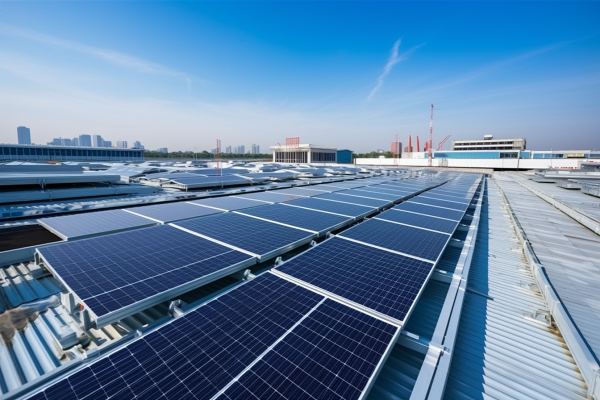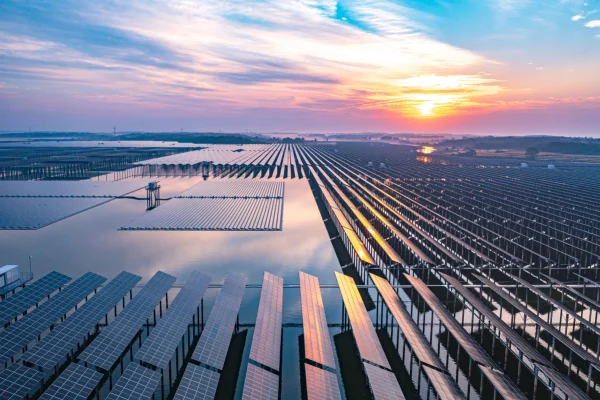


Against the backdrop of the continuous deepening of the dual carbon strategy and the comprehensive transformation of photovoltaic power station operation and maintenance towards refinement and standardization, various scenarios such as centralized large-scale photovoltaic bases, industrial and commercial distributed rooftop power stations, household photovoltaics, complementary agricultural photovoltaics, and mountain photovoltaics are expanding synchronously. The demand for fast and high-precision outdoor on-site testing is experiencing explosive growth. Traditional desktop IV testing equipment has a large volume, relies on fixed mains power, and is difficult to transport. It can only complete component performance testing in the laboratory and cannot go to the power plant site to carry out string fault diagnosis, engineering acceptance, and power attenuation assessment of old power plants, which has long constrained the improvement of photovoltaic operation and maintenance efficiency. In response to the long-standing testing pain points in the industry, Jiangsu Jingwei Technology has independently developed and launched the JW-IV12 portable IV tester based on years of accumulation of photovoltaic measurement and testing technology. With four core advantages of lightweight body, millisecond level high-precision sampling, intelligent data diagnosis, and all-weather outdoor adaptation, it breaks the technical barriers between laboratory and on-site testing, and becomes a portable performance testing laboratory in the photovoltaic industry, fully empowering the quality control of the entire lifecycle of photovoltaics. Outdoor IV tester
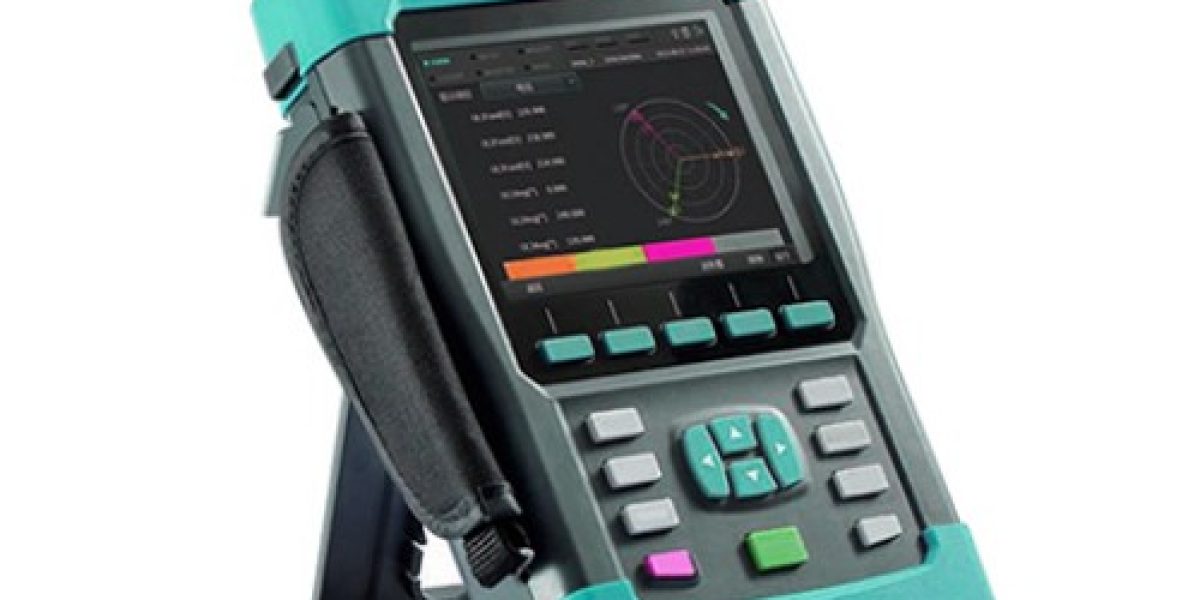
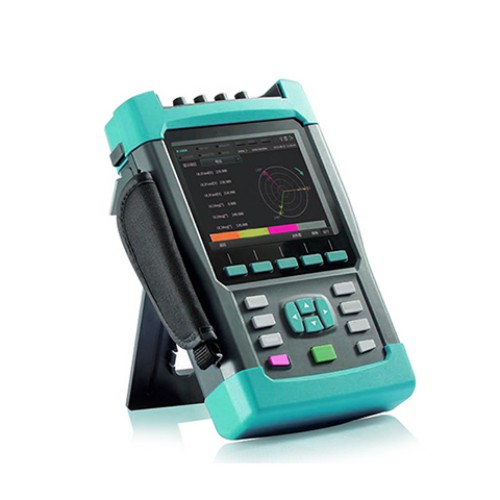
Jiangsu Jingwei Technology is deeply engaged in the field of photovoltaic precision measurement. The core circuit, adaptive electronic load, and environmental compensation algorithm have all been domestically developed and independently researched. JW-IV12 abandons the traditional bulky and separate structure of equipment and adopts an integrated protective body. The whole machine is equipped with a wear-resistant engineering protective box, which can be easily transported by a single person's hand or shoulder. It is suitable for various restricted work spaces such as high-altitude roofs, remote desert mountains, and floating photovoltaics on water, without the need for large transportation equipment. The efficiency of cross regional third-party inspection and field inspection operations has been greatly improved. The equipment is equipped with an industrial grade high-speed ADC sampling chip, which synchronously collects a complete set of electrical parameters such as open circuit voltage, short circuit current, peak power, fill factor, series resistance, and parallel leakage resistance within milliseconds of a single scan. The standard IV characteristic curve is fully drawn, and the measurement accuracy can reach ± 0.4% FS, fully complying with the IEC61215 and IEC61853 photovoltaic module testing national standards. The test data can be directly used for project acceptance and third-party testing report issuance, and the authority of the data has been widely recognized in the industry.
Different from ordinary portable IV devices on the market that can only measure basic parameters, the JW-IV12 has a built-in self-developed environment intelligent compensation module, matched with external high-precision irradiation and temperature synchronous acquisition probes. During the testing process, it captures real-time on-site light intensity and component backplane temperature, automatically corrects the measured curve and power parameters to STC standard testing conditions, and completely solves the problem of distortion in test data comparison in morning and evening, cloudy, high temperature, and low temperature environments. Operation and maintenance personnel do not need to manually convert parameters. The equipment automatically outputs standardized comparison data, quickly identifying hidden faults such as component power attenuation, hidden cracks, bypass diode failure, and string mismatch, and accurately locating the source of power generation loss. In response to the demand for batch inspection of large-scale photovoltaic stations, the equipment only takes 3 to 5 seconds for a single inspection, with built-in large capacity local storage that can save tens of thousands of sets of IV curve raw data. It supports USB high-speed export, wireless cloud synchronization and archiving, and automatically generates standardized inspection reports, saving a lot of manual recording and post-processing time, and improving batch inspection efficiency by more than 70%.
The equipment fully considers the safety and endurance requirements of outdoor operations, with built-in high-voltage isolation protection circuit, equipped with multiple hardware protection mechanisms such as overvoltage, overcurrent, overtemperature, and reverse connection, and a wide range of 1500V covering current mainstream single crystals TOPCon、HJT、 Thin film module and high-voltage photovoltaic string testing, suitable for testing high-voltage systems in large ground power stations. High density lithium batteries can be continuously inspected outdoors all day when fully charged, and remote areas without mains power supply do not require external power supply; The body adopts IP54 industrial dustproof and waterproof design, which can operate stably in sandstorm and light rain weather. The touch screen is paired with physical buttons for dual control, and the screen is clear and visible under strong light. Zero basic operation and maintenance personnel can operate independently in a short period of training,
greatly reducing the labor threshold and labor cost for professional inspection personnel in enterprises.
The current photovoltaic industry has high prices for imported portable IV equipment, long after-sales response cycles, and software upgrade fees. Domestic production with high cost-effectiveness has become a necessity in the industry. Jiangsu Jingwei JW-IV12 relies on independent production lines to achieve cost optimization, with a pricing of only 60% for imported equipment of the same precision. At the same time, it has established multiple offline technical service outlets nationwide, providing on-site equipment debugging, operation and maintenance training, annual measurement calibration, and lifelong free upgrade of supporting analysis software throughout the entire cycle. From procurement to long-term use, it comprehensively reduces the comprehensive operation and maintenance costs of enterprises. At present, the equipment has been widely used in the factory sampling process of top domestic photovoltaic operators, third-party testing institutions, EPC engineering enterprises, and component production enterprises. Field test data from mountainous photovoltaic and industrial and commercial distributed power stations in multiple places shows that with the JW-IV12, quarterly performance inspections can be carried out 8 months in advance to detect potential power attenuation hazards in components. The overall power generation revenue of the power station has increased by 5% to 8%, and the long-term operation and maintenance costs have significantly decreased.
As an innovative enterprise in the localization of photovoltaic detection instruments, Jiangsu Jingwei has always adhered to the product development concept of "precise detection, efficient operation and maintenance, cost reduction and efficiency improvement", and continuously iterated and optimized detection equipment for the real pain points of photovoltaic operation and maintenance. The landing of the JW-IV12 portable IV tester fills the gap in the domestic market for lightweight and high-precision outdoor IV testing equipment, and promotes a new mode of photovoltaic power station performance testing from laboratory static testing to on-site dynamic digital diagnosis. In the future, enterprises will continue to improve their entire product matrix for photovoltaic testing, linking EL imaging, irradiation monitoring, insulation testing, and meteorological monitoring equipment to create an integrated photovoltaic operation and maintenance testing solution. With independently controllable precision measuring equipment, they will help promote the high-quality and standardized development of the domestic photovoltaic industry, and continue to provide reliable technical support for the implementation of the dual carbon target.
Outdoor IV tester, portable IV power tester for photovoltaic power plants, portable IV tester