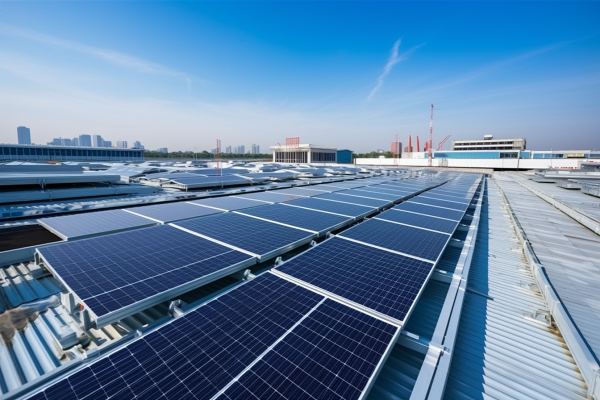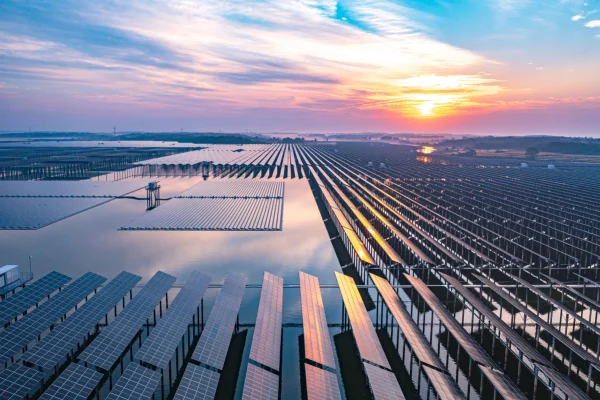


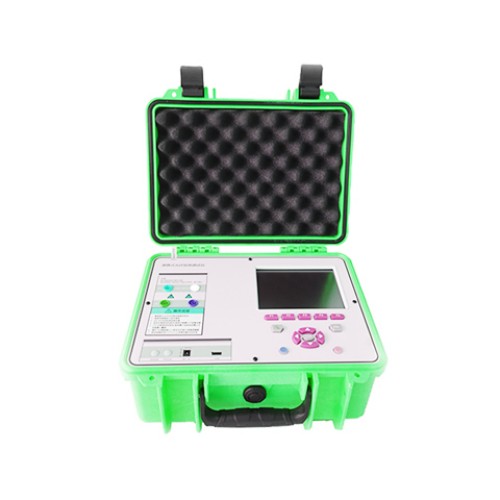
Against the backdrop of the continuous promotion of the dual carbon strategy and the synchronous expansion of the stock and new construction scale of photovoltaic power stations nationwide, diversified scenarios such as distributed rooftop photovoltaics, complementary mountain agricultural photovoltaics, large-scale ground power stations, and floating photovoltaics have put forward comprehensive requirements for portable, high-precision, intelligent, and all-weather operation of on-site component performance testing equipment. Traditional laboratory desktop IV testers are bulky and rely on fixed mains power, making it impossible to conduct real-time performance verification of string and single component testing in field areas; Low end portable devices on the market generally suffer from pain points such as insufficient sampling accuracy, lack of standard operating condition compensation, difficulty in data traceability, and prominent short battery life, which seriously restrict the efficiency of power station acceptance, daily operation and maintenance, fault tracing, and upgrading of old components. Jiangsu Jingwei Technology has been deeply involved in the research and development of photovoltaic detection instruments for many years. Based on the three core technologies of photoelectric measurement, embedded algorithms, and industrial portable structures, it has officially launched the JW-IV12 portable IV tester, which combines laboratory level measurement accuracy with outdoor mobile operation advantages, and solves the problem of photovoltaic full scene IV curve detection in one stop, reshaping the industry's on-site detection operation mode. Current voltage power curve detector
The JW-IV12 core hardware adopts high-precision and wide range electronic loads and a 24 bit high-speed ADC sampling chip. It completes the acquisition of all electrical performance parameters in milliseconds with a single round of scanning, and outputs complete I-V and P-V hyperbolas. It accurately reads more than ten core indicators such as open circuit voltage Voc, short-circuit current Isc, peak power Pmax, fill factor FF, series resistance Rs, parallel leakage resistance Rsh, etc. The measurement error is controlled within ± 0.3% FS, fully complying with the IEC61215, IEC61853 photovoltaic module detection national standards and third-party acceptance specifications. The detection data can be directly used as an effective basis for engineering acceptance and quality arbitration. The device supports a maximum DC voltage range of 1200V and is compatible with TOPCon, HJT, PERC, thin film, old polycrystalline components, and high-voltage string detection. It can adapt to different voltage levels of household small photovoltaics, industrial and commercial distributed, and GW level large photovoltaic bases without the need to replace accessories. Its versatility is significantly ahead of similar portable instruments.
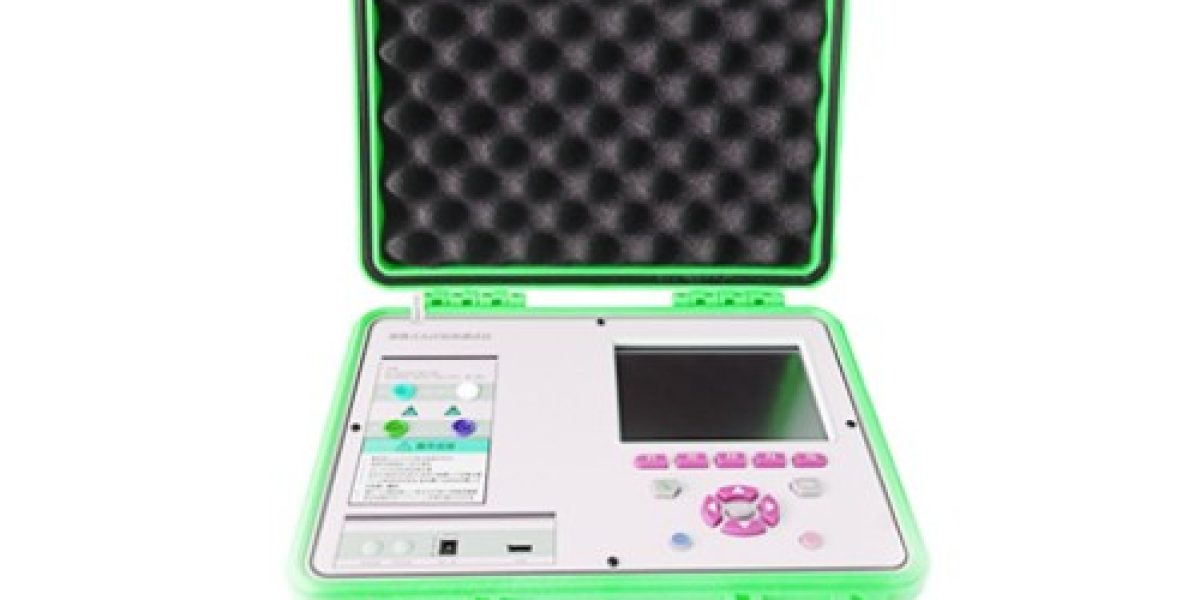
For complex outdoor working conditions, the JW-IV12 is equipped with an integrated environment synchronization acquisition module, which integrates high-precision irradiation sensing and patch temperature probes. The testing process synchronously captures the on-site light intensity and component surface temperature. It has a self-developed STC standard working condition compensation algorithm, which automatically corrects the on-site measured curve to the standard testing environment, completely eliminating data deviation caused by morning and evening, cloudy, and temperature differences. Operation and maintenance personnel do not need to manually convert, and obtain standardized performance reports with horizontal comparison value on the spot, quickly distinguishing different types of faults such as natural attenuation, shadow obstruction, internal hidden cracks, wiring virtual welding, PID attenuation, etc., and accurately locating the root cause of power generation efficiency decline. The whole machine adopts a lightweight integrated protective box design, with a total weight of less than 6.5kg for the main unit, testing cables, and sensing probes. The shoulder strap and handheld dual carrying structure make it easy for a single person to climb roofs and hike mountain areas. The inspection can be started in 30 seconds after opening the box and wiring. The complete inspection process for a single component does not exceed 4 seconds, and the efficiency of batch string inspection is increased by more than 8 times. The shell is made of IP54 industrial dust-proof and waterproof material, with built-in multi-layer buffering and shock absorption structure. It can operate stably in fields with bumps, light rainfall, and sandy outdoor environments; Equipped with a large capacity low-temperature lithium battery, it can continuously complete uninterrupted testing of 600 components all day long when fully charged. Remote and non urban photovoltaic fields do not require external power supply, and the factory area is also equipped with fast charging interfaces for batch testing, meeting the dual needs of field inspection and indoor storage sampling.
Intelligent data management is the core advantage of JW-IV12 differentiation. The body is equipped with a 5-inch high-definition touch display screen, which enables real-time visualization of curves and parameters, and supports local magnification to view curve distortion details; The local built-in ultra large storage can store tens of thousands of complete detection files offline. Each set of data is automatically bound with component numbers, detection time, field location, and environmental parameters, achieving quality traceability throughout the entire lifecycle of components. The device is equipped with dual transmission channels of USB and wireless Bluetooth, allowing for one click export of standardized PDF reports upon completion of testing. It automatically generates complete documents including curve graphs, parameter details, and defect analysis, and can be directly integrated with the power station operation and maintenance management platform and third-party testing agency data systems, eliminating the tedious process of manual recording and tabulation, and significantly reducing the cost of paper file management. At the same time, the equipment is equipped with intelligent fault recognition algorithms that automatically identify curve distortion features. Pop up prompts indicate that components have problems such as large leakage current, local obstruction, and battery cell failure, reducing the professional threshold for operators. Zero basic personnel can independently complete the entire set of testing work after a short period of training, alleviating the shortage of professional operation and maintenance personnel in the industry.
From the perspective of application scenarios, JW-IV12 covers the testing needs of the entire photovoltaic industry chain: component manufacturing enterprises use it for finished product outbound sampling to quickly screen for defective products with power not meeting standards; The engineering construction unit is used for the completion acceptance of project grid connection, verifying the actual output power of each component group, and eliminating the use of inferior products as good ones; Photovoltaic operation and maintenance enterprises use quarterly and annual regular inspections to assess the degree of component degradation and develop targeted maintenance plans; Third party testing institutions and power research institutes are used for on-site performance arbitration and empirical testing of new photovoltaic technologies; In the scenario of rapid damage assessment in post disaster power stations, equipment can quickly enter the site to screen for hail and typhoon damaged components in batches, accurately calculate power losses, and provide quantitative data support for insurance claims and equipment replacement. Compared with traditional detection methods, using JW-IV12 can reduce at least two field workers, shorten the detection time of a single site by 70%, and avoid repeated rework due to insufficient detection accuracy. Long term use significantly reduces the comprehensive cost of power plant operation and maintenance.
Jiangsu Jingwei Technology has always adhered to the independent research and development of domestically produced high-end photovoltaic testing equipment. The entire set of hardware circuits, algorithm software are all independent intellectual property rights, and we have a complete after-sales and localized calibration service system. Technical service teams are equipped in various concentrated areas of the photovoltaic industry across the country, providing on-site debugging, personnel training, annual calibration, and lifelong free firmware upgrade services throughout the entire cycle. The landing of JW-IV12 portable IV tester fills the gap of domestic high-voltage portable high-precision IV detection equipment, breaks the price monopoly of similar products overseas, and helps promote the fine operation and maintenance of the photovoltaic industry with high cost-effectiveness and stable and reliable performance. In the future, Jiangsu Jingwei will continue to iterate the photoelectric detection algorithm, expand the remote monitoring function of the Internet of Things equipment, and create a complete domestic detection instrument matrix around photovoltaic modules, inverters, and energy storage systems. With hardcore technology, it will help promote the high-quality development of the new energy industry and provide reliable detection equipment support for the dual carbon target landing.
Current voltage power curve detector, PV power station IV power detector, PV power station portable IV power tester