

Solar irradiance is the core benchmark data for photovoltaic module power calculation, power generation prediction, power station performance evaluation, and system design optimization. The accuracy of irradiance measurement directly determines the compliance of photovoltaic project acceptance and the scientificity of operation and maintenance strategies. For a long time, there have been common industry pain points in photovoltaic field measurement: traditional simple irradiation sensors have large accuracy deviations, no temperature compensation, and distorted measurements in high and low temperature environments; The equipment parameters are single, only collecting instantaneous irradiation, and cannot synchronously record temperature, humidity, and component temperature; The body is bulky and the battery life is short, making it unsuitable for multi-point mobile inspections on mountains and rooftops; The lack of data storage and transmission functions makes it difficult to form a complete monitoring ledger and match the digital management needs of smart power stations. In response to the urgent need for refined monitoring in the industry, Jiangsu Jingwei integrates A-level photoelectric sensing chips and multi-dimensional environmental compensation algorithms, and independently develops the JW-F04 portable irradiance meter, which integrates high-precision irradiance measurement, synchronized collection of multiple environmental parameters, long endurance portable body, and intelligent data management. It has become a standard supporting equipment for photovoltaic field testing, resource surveying, power station operation and maintenance, and laboratory calibration. Portable irradiation system dosimeter
JW-F04 is equipped with Class A-grade high-precision silicon light irradiation sensor, which perfectly matches the spectral absorption characteristics of photovoltaic cells in terms of spectral response. The measurement range covers 0-2000W/㎡, and the measurement accuracy error is ≤± 2%, meeting the standards of metrology laboratory. The device is equipped with a multi-stage temperature compensation circuit, which automatically corrects measurement values for the entire temperature range from -30 ℃ to+60 ℃, eliminating data drift caused by high temperature exposure and low temperature in winter. It can output stable and accurate irradiation data regardless of the high temperature field in the northwest Gobi, the high-altitude mountainous areas in the north, and the rainy and humid roofs in the south, fully meeting the IEC61853 photovoltaic performance testing standard. The measurement data has metrological compliance effectiveness and can be used for project grid connection acceptance and third-party performance testing certification. Different from a single irradiation measurement device, JW-F04 integrates a patch type component temperature probe and an environmental temperature and humidity sensing unit. It synchronously collects four core parameters, including total solar irradiance, component backplate temperature, environmental temperature, and relative humidity, in a single measurement, without the need to carry multiple instruments for separate measurements, greatly simplifying the on-site inspection process. A complete set of environmental data is synchronously matched with IV curves and EL imaging detection, achieving joint analysis of photovoltaic performance and environmental variables, and accurately distinguishing power fluctuations caused by lighting, temperature, and component defects.
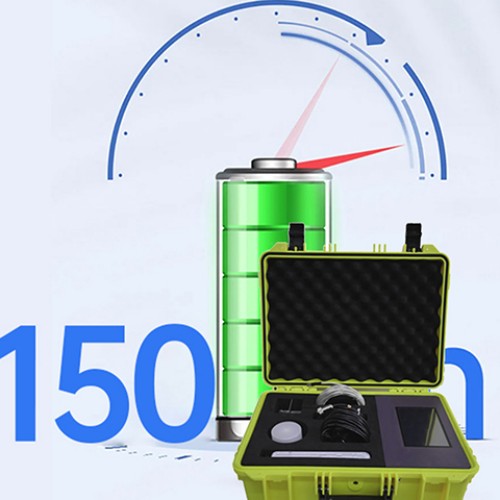
Portability and high battery life are the core design highlights of the JW-F04, which is suitable for outdoor mobile operations. The whole machine adopts an integrated handheld body, which is compact in size and can be held and operated with one hand. It weighs only 320g and is equipped with a retractable portable bracket. It can hold up close range measuring points or be fixed on the surface of photovoltaic components for long-term fixed-point monitoring; The body adopts IP65 industrial grade protection, which is dustproof, waterproof, and resistant to UV aging. Long term outdoor storage will not cause aging and failure of the sensing unit. The power supply system adopts large capacity and low-power lithium batteries, which can continuously monitor for 150 hours in standard mode. The data timed storage mode can support 7 days of unmanned fixed-point survey in the field; Equipped with a universal Type-C fast charging interface, the phone can be recharged with a charging cable, and there is no need to carry a dedicated power adapter for field operations. The body is equipped with a 2.8-inch high brightness OLED display screen, with strong outdoor visibility and a fully Chinese operation menu. It supports real-time display of instantaneous values, automatic recording at 5-minute/10 minute/30 minute intervals, and cumulative radiation total statistics. The operation and maintenance personnel can switch measurement modes with just one click, without the need for complex parameter settings, allowing beginners to quickly get started.
The intelligent data management system enables JW-F04 to adapt to the trend of digital operation and maintenance of photovoltaics. It is equipped with a large capacity storage chip locally, which can store tens of thousands of sets of multi-dimensional monitoring data offline. Each record automatically marks the collection time and four environmental parameters, and can complete multi-point cyclic inspections throughout the field without real-time connection to terminals. The device is equipped with a Bluetooth wireless transmission module, which can synchronize monitoring data in real time to mobile phones, tablets, and computer terminals. It is equipped with dedicated data management software, which automatically generates radiation daily variation curves and temperature and humidity trend reports, and supports data export and archiving in Excel format; At the same time, it can be linked with Jiangsu Jingwei JW-IV12 portable IV tester to transmit data. During IV testing, corresponding irradiation and temperature data are automatically retrieved, and a complete comprehensive testing report containing electrical performance and environmental benchmarks is generated with one click, eliminating manual recording and input steps and greatly improving the efficiency of on-site testing and post report production. The equipment is additionally equipped with a measurement calibration interface, which supports rapid on-site calibration without the need for frequent factory calibration, reducing equipment operation and maintenance costs, and ensuring long-term stable measurement accuracy.
At present, the JW-F04 portable irradiance meter is widely used in various scenarios such as quality inspection of photovoltaic module manufacturers, survey of new photovoltaic power plants, distributed roof acceptance, annual performance evaluation of existing power plants, and photovoltaic research experiments in universities. The resource survey team of a certain new energy design institute provided feedback after use that the equipment is lightweight and easy to carry, and a single person can complete multi-point surveys of mountain photovoltaic resources throughout the day. The synchronous collection of multiple parameters greatly shortens the survey cycle, improves the accuracy of irradiation data, and reduces the deviation of power generation calculation by 12%; Multiple third-party testing institutions have used it as a standard auxiliary testing equipment for IV testing, ensuring complete and compliant testing reports and successfully passing the grid connection acceptance verification.
As a core instrument supporting the entire photovoltaic detection chain, Jiangsu Jingwei JW-F04 has four core advantages: high-precision sensing, multi parameter integration, ultra long battery life, and intelligent interconnection. It solves various pain points in photovoltaic field irradiation measurement and provides precise underlying data support for the digital and refined operation and maintenance of the photovoltaic industry. Jiangsu Jingwei will continue to iterate sensing compensation algorithms, expand data interoperability with photovoltaic weather stations and intelligent operation and maintenance platforms, improve the photovoltaic environmental monitoring product matrix, and use domestically produced precision measurement equipment to support the high-quality development of the new energy industry.
Portable irradiation system thermometer, portable photovoltaic PR testing system, photovoltaic performance evaluation tool