

Solar irradiance is a core fundamental parameter for evaluating the power generation performance of photovoltaic modules, calculating the theoretical power generation of power plants, calibrating IV test data, and optimizing power plant operation and maintenance strategies. In on-site photovoltaic testing operations, small deviations in irradiance values can directly lead to significant errors in component power measurement and power generation revenue evaluation. Traditional ordinary metering equipment has shortcomings such as insufficient accuracy, large temperature drift, poor portability, and inability to synchronize with IV detection equipment, making it difficult to meet the strict requirements of distributed photovoltaic acceptance, large-scale power plant energy efficiency verification, and third-party testing standardization operations. Focusing on the high-precision on-site metering needs of the photovoltaic industry, Jiangsu Jingwei Technology has launched the JW-F04 portable irradiance meter. With four core advantages of high-precision photosensitive chip, wide range adaptive, lightweight integration, and multi device linkage, it provides a professional level solution for photovoltaic full scene irradiance monitoring and has become an essential basic instrument in photovoltaic detection, power station operation and maintenance, and photovoltaic research fields. Portable irradiation system dosimeter
The photovoltaic detection industry has special standards for irradiance measurement that differ from general photometry instruments: it requires fitting the spectral response curve of photovoltaic cells, accurately simulating the solar radiation values received by components, and adapting to the full illumination range of weak light in the morning and evening, strong light at noon, scattered light in cloudy weather, and diffused light in cloudy weather. The data is stable and drift free under long-term outdoor work. The core photosensitive unit of Jiangsu Jingwei JW-F04 adopts imported photovoltaic dedicated silicon light sensors, with a spectral response range that matches the photovoltaic conversion band of the crystalline silicon cell, perfectly meeting the spectral requirements of the IEC photovoltaic detection standard, and avoiding systematic errors caused by spectral mismatch of general metering equipment. The irradiance measurement range of the equipment covers 0-2000W/㎡, and can accurately capture from weak light of tens of watts in the morning to super strong sunlight at noon in summer. The basic measurement accuracy is better than ± 2%, and the linear error is controlled within ± 0.5%. Before leaving the factory, it has undergone multi-point calibration by professional metrology institutions, with supporting calibration certificates. The test data has legal effect and fully meets the requirements of third-party testing institutions and engineering project acceptance compliance.
Traditional irradiance meters are mostly in a split structure, with sensors and display hosts separated, complicated wiring, and inconvenient storage. Outdoor high-altitude operations are prone to problems such as tangled circuits, loose connectors, and data interruption. JW-F04 adopts an integrated lightweight design, with the photosensitive probe and display terminal integrated into one. The whole machine weighs only 0.85kg, and the palm sized body is matched with an anti slip handheld handle, which can be used for handheld measurement and bracket fixed installation. Single person operation does not require additional accessories, and can be flexibly used in narrow spaces such as roofs, mountains, and greenhouses with complementary agricultural lighting. The body is equipped with a foldable light shielding protective cover, which covers the photosensitive probe when idle to prevent scratches on the sensor from dust, rain, and hard objects, extending the service life of the equipment; The shell is made of weather resistant engineering plastic, with an IP65 waterproof and dustproof rating. It can operate stably for short-term outdoor measurements in rainy weather and for dusty desert power plant operations, without fear of complex outdoor environment erosion.
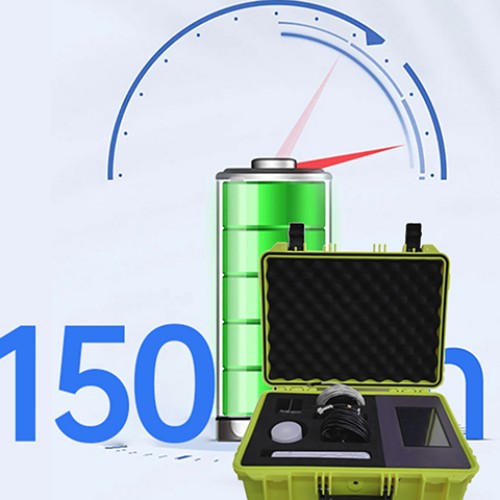
To meet the needs of on-site photovoltaic testing, JW-F04 is designed with multiple practical functions to directly address the pain points of frontline operations. The device is equipped with a high-definition LCD digital display screen with built-in backlight, which provides clear readings in low light environments such as nighttime and cloudy days. The screen displays three core data sets in real-time: instantaneous irradiance, daily cumulative radiation, and ambient temperature. It can switch between units of W/㎡ and MJ/㎡ with just one click, and is compatible with different industry report writing standards. Equipped with a large capacity rechargeable lithium battery, it can sustain continuous monitoring for 72 hours after a full charge, supports Type-C fast charging, and can be recharged at any time through on-site power banks and car USB interfaces, without the need for frequent battery replacement, reducing the cost of operation and maintenance consumables. A standard data output interface is reserved on the side of the body, which can be wired linked to the Jiangsu Jingwei JW-IV13 portable IV tester to synchronously collect irradiance and component electrical performance data, automatically complete STC standard condition power conversion, eliminate the interference of lighting fluctuations on the IV curve test results, and greatly improve the accuracy and efficiency of the entire testing process data.
The data storage and traceability function meets the requirements of standardized testing and archiving. JW-F04 has a built-in local storage module that can automatically record daily and hourly irradiance data. A single device can store continuous monitoring records for 3 months, and supports exporting complete data tables from a USB drive. The exported files include timestamps, real-time irradiance, and temperature values, which can be directly used for power plant power generation comparison analysis, long-term tracking of component attenuation, and feasibility study data support for photovoltaic projects. At the same time, the equipment supports timed automatic sampling mode. After the operation and maintenance personnel set it up and fix it, there is no need for a dedicated person to be on duty. The instrument automatically records light data at set intervals and is suitable for long-term monitoring scenarios such as power station site selection survey and long-term comparison experiments of component outdoor attenuation, freeing up manpower. In addition, the equipment comes with matching calibration accessories, which support easy on-site calibration without frequent return to the factory, reducing maintenance time and costs in the later stage.
JW-F04 application scenarios cover the entire photovoltaic industry chain: during the engineering acceptance stage, it is equipped with an IV tester to complete on-site verification of component power and issue compliance testing data; Daily operation and maintenance of the power station, long-term monitoring of irradiance changes, comparing the difference between theoretical and actual power generation, and quickly locating component attenuation, obstruction, and line faults; Preliminary survey of photovoltaic projects, collection of annual lighting data of the site, and auxiliary calculation of installed capacity and revenue; Outdoor testing in research institutions and component laboratories, providing high-precision lighting benchmark data; Third party testing institutions conduct standardized sampling to meet industry metrological compliance standards. Since its launch, this equipment has gained mass procurement from numerous photovoltaic operation and maintenance enterprises, testing institutions, and component manufacturers across the country due to its unique advantages of high precision, portability, and easy use, as well as the ability to be linked with supporting testing instruments. Feedback from frontline operators, when used in conjunction with the Jingwei IV equipment, has reduced testing data errors by 70% and shortened the entire operation process by nearly half.
Jiangsu Jingwei stated that the JW-F04 portable irradiance meter is a key product for enterprises to improve their photovoltaic detection instrument matrix, balancing professional accuracy and outdoor practicality, and filling the gap in precise monitoring of photovoltaic on-site illumination. Relying on the complete R&D and production system of the enterprise, all instruments are provided with a three-year complete machine warranty and lifelong calibration technical support. After sales service outlets have been established in multiple regions across the country to quickly respond to customer equipment debugging, maintenance, and calibration needs. In the future, enterprises will continue to optimize sensor accuracy, expand wireless Bluetooth data transmission capabilities, achieve cloud based synchronized storage and analysis of irradiance data, further empower the fine and digital operation and maintenance of photovoltaic power plants, and use high-precision detection instruments to assist in the standardization and high-quality development of the new energy industry.
Portable irradiation system thermometer, portable photovoltaic PR testing system. Photovoltaic performance evaluation tool