

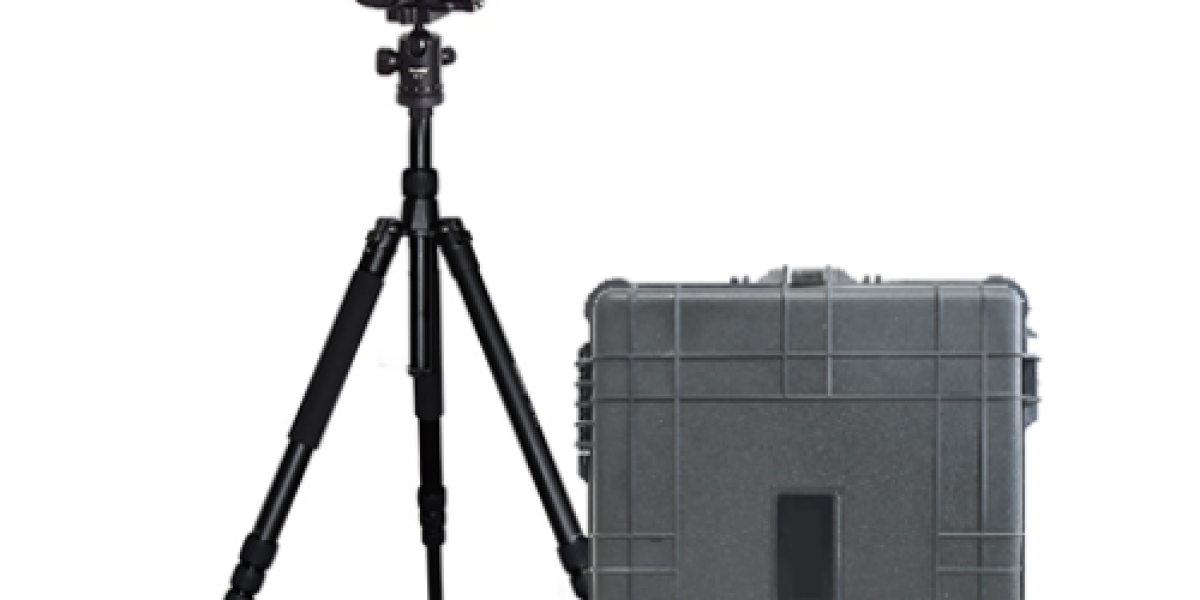
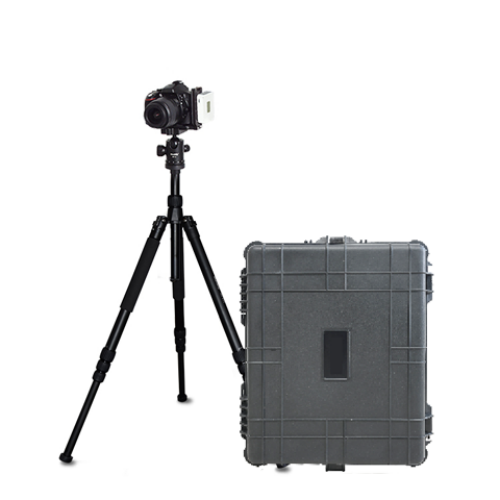
Hidden defects such as internal cracks, virtual soldering, broken grids, black cores, and fragments in photovoltaic modules are the core causes of the annual decline in power generation, potential safety hazards of hot spots, and premature scrapping of modules. Traditional electroluminescent EL detection equipment is mostly large desktop models that require the construction of darkrooms, rely on fixed mains power, are heavy and difficult to move, can only be used in factory workshops, and cannot enter outdoor power stations that have been put into operation for on-site inspection. A large number of distributed roofs, mountain photovoltaics, and old stock power stations have long-term internal defects that cannot be investigated, causing sustained economic losses to photovoltaic operators. In response to the gap in outdoor non-destructive testing in the industry, Jiangsu Jingwei Technology has launched the JW-EL5 portable EL detector based on its self-developed technology of infrared imaging and AI image recognition. It breaks through the limitations of traditional EL equipment site and environment, and achieves high-definition outdoor imaging day and night. With three core advantages of lightweight body, high-sensitivity infrared camera, and intelligent defect automatic recognition, it has become an essential "module endoscope" for photovoltaic operation and maintenance, fully connecting the non-destructive testing channels of photovoltaic module factory quality inspection, arrival acceptance, and outdoor operation and maintenance. Rapid detection instrument for hidden cracks in photovoltaic panels
For a long time, there have been two major industry pain points in outdoor EL testing: firstly, the imaging sensitivity of traditional portable devices is insufficient, and natural light interference is severe during the day, requiring dark work in the evening or late at night, which greatly prolongs the testing period; The second issue is that manual frame by frame interpretation of EL images is inefficient, and fine cracks and micro virtual welding are easily missed, requiring extremely high professional experience from operators. The Jiangsu Jingwei R&D team has launched a special technical campaign to tackle the three major challenges of outdoor strong light interference, lightweight, and intelligent diagnosis. The JW-EL5 is equipped with a self-developed strong light suppression infrared imaging module, coupled with a professional optical filtering system, effectively filtering out sunlight interference and achieving direct detection without dark sheds during the day, without waiting for night work. The daily detection volume has been increased by more than twice. The imaging resolution of the device reaches high-definition industrial grade, capturing subtle damage to battery cells at the micrometer level. 0.1mm micro cracks, edge virtual welding, and low efficiency areas on a single chip can all be clearly imaged without any blind spots in detection, avoiding missed or misjudged issues from the root.
In terms of portable design, JW-EL5 completely overturns the traditional bulky form of EL devices. The whole machine integrates a light source, imaging host, and power supply battery. After the entire set of equipment is stored, the size is compact, and the net weight of the host is only 2.3kg. Paired with a telescopic portable bracket and backpack storage bag, operation and maintenance personnel can carry it alone to climb onto rooftops and penetrate mountain photovoltaic arrays. It can be flexibly set up in narrow roofs and complex bracket areas. The equipment is powered by a detachable large capacity lithium battery, which can support uninterrupted on-site testing for 8 hours a day at full charge. It supports vehicle charging and mobile power supply replenishment, completely free from the 220V mains power limit. Even remote and unpowered photovoltaic stations can carry out flaw detection work at any time. The body shell is made of impact resistant, waterproof and dustproof materials, meeting the IP64 protection standard, suitable for various outdoor environments such as rainy southern regions, sandstorms in northern regions, and high humidity along the coast. It is stable and durable for long-term field operations, and is not prone to lens fogging or circuit moisture failure.
The JW-EL5 stands out for its minimalist and efficient operation process. The entire machine is equipped with a 10 inch high-definition touch control terminal and a fully Chinese visual operation interface. With simple wiring and equipment setup, single component imaging can be completed with just one click, and single image acquisition can be completed in as fast as 3 seconds without the need for complex parameter debugging. The device is equipped with an AI intelligent analysis engine that trains millions of photovoltaic defect samples. After imaging is completed, the system automatically identifies more than ten common defects such as hidden cracks, broken grids, virtual welding, black hearts, hot spot hazards, fragments, electrode contamination, etc. It automatically marks the location, size, and severity level of defects, distinguishes minor process defects from structural damage, and does not require operation and maintenance personnel to manually judge each one based on experience, greatly reducing the operating threshold. Novice trainees can independently complete batch testing within one hour of training. All imaging images and defect analysis data are automatically stored locally, with a built-in large storage space that can save tens of thousands of EL detection original images. It supports USB flash drive export and wireless screen projection to computers and mobile terminals, automatically generating standardized detection reports with defect annotation original images. The data is complete and traceable, meeting the needs of engineering acceptance, quality assurance claims, and power plant health assessment data retention.
Adaptation scenarios cover the entire process of the photovoltaic industry: at the module production end, it can be used for sampling and quality inspection on the production line, re inspection of finished products from the warehouse, and rapid screening of process defects; During the construction phase, the components received are unpacked and inspected, and quality checks are conducted after installation to accurately locate hidden cracks in the battery cells caused by transportation and lifting processes; During the operation and maintenance phase of existing power stations, annual physical examinations, abnormal power generation inspections, and prediction of heat spot hazards are conducted to avoid component burnout and fire risks in advance; At the same time, it is suitable for third-party testing agencies to conduct outdoor on-site sampling and evaluate the residual value of old photovoltaic modules. At present, the construction period of a large number of household and commercial distributed photovoltaics in China is gradually increasing, and internal damage to components is accumulating year by year. The JW-EL5 portable EL detector, with its all-weather outdoor operation capability, fills the gap in the on-site non-destructive testing market of existing power stations, helps operators to identify hidden dangers in advance, reduce power generation losses and equipment replacement costs.
According to market research data from Jiangsu Jingwei, multiple photovoltaic operation and maintenance enterprises that have put JW-EL5 into use have reported a 60% reduction in labor costs for outdoor defect detection, a defect omission rate of less than 0.5%, and a significant reduction in project maintenance cycles due to daytime detection modes. The R&D leader of the enterprise stated that the launch of JW-EL5 has improved the Jingwei photovoltaic testing equipment matrix, forming a complete testing solution with its IV tester, irradiance meter, insulation tester, and photovoltaic weather station, providing one-stop solutions for the comprehensive testing needs of electrical performance, internal defects, environmental parameters, and insulation safety of power plants. In the future, Jiangsu Jingwei will continue to iterate AI defect recognition algorithms, expand unmanned aerial vehicle linkage EL detection supporting solutions, continuously improve the intelligence level of photovoltaic non-destructive testing, and use self-developed high-end instruments to assist in the fine operation and maintenance of photovoltaic power plants, promoting the improvement of quality, efficiency, safety and sustainable development of the new energy industry.
Photovoltaic panel hidden crack rapid detection instrument, photovoltaic panel detection instrument, outdoor photovoltaic power station tester