


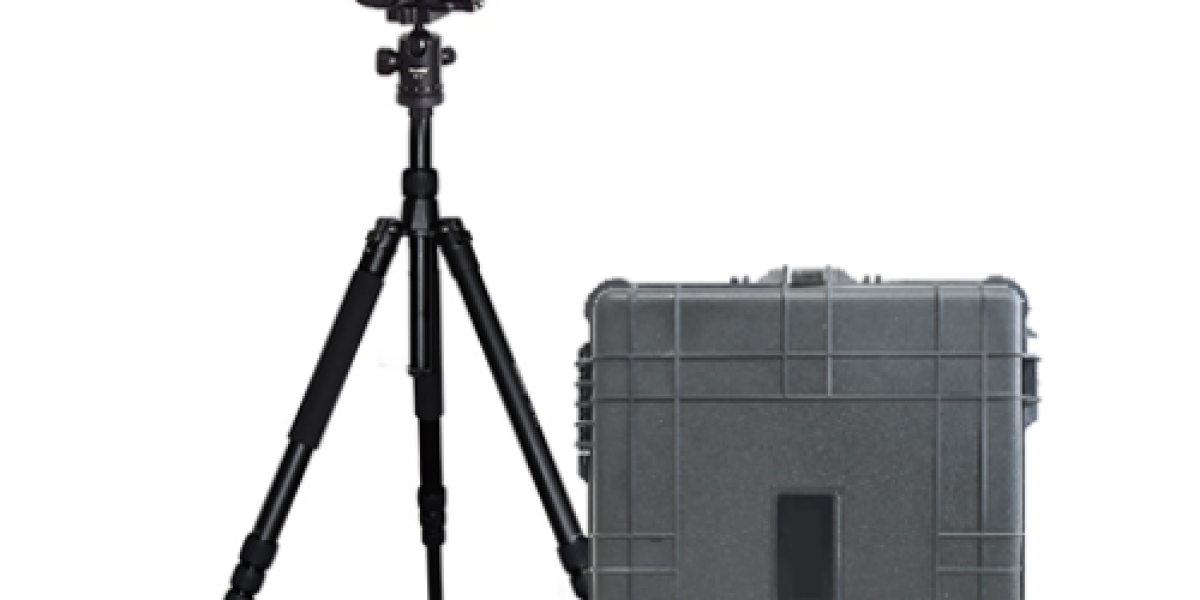
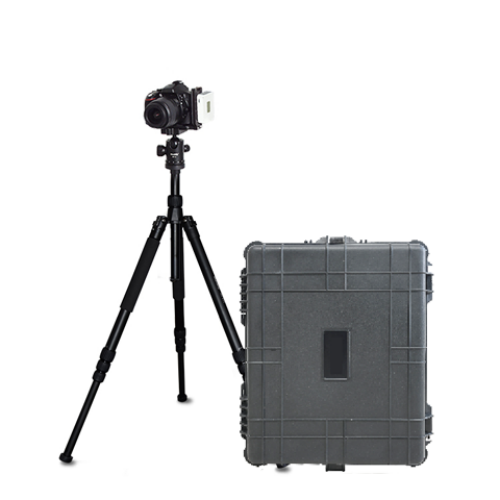
As the core component of power generation in power plants, photovoltaic modules have hidden defects such as internal cracks, broken grids, and virtual welding, which are the main causes of power attenuation, hot spot faults, and even premature scrapping of the modules. However, such defects cannot be recognized by the naked eye and conventional detection methods are difficult to accurately capture. Jiangsu Jingwei Technology Co., Ltd. is deeply engaged in the field of photovoltaic non-destructive testing, breaking through the industry bottleneck of traditional EL detectors being bulky, complex to operate, and dependent on mains electricity. We have independently developed the JW-EL2 portable EL detector, which focuses on high-sensitivity imaging, lightweight portability, and intelligent diagnosis. It has become a "portable physical examination device" for photovoltaic modules, providing comprehensive protection for the core health of photovoltaic modules. Photovoltaic power station tester
Electroluminescence (EL) imaging technology is currently the "gold standard" for detecting internal defects in photovoltaic modules. Its principle is to excite the electroluminescence effect inside the module by applying a specific voltage, capture the luminescence image of the module using a high-sensitivity infrared camera, and accurately identify microscopic defects that cannot be detected by the naked eye. Traditional fixed EL detectors have a large volume and weight of over 20kg, requiring fixed installation in laboratories or production lines, and cannot achieve on-site testing in outdoor power stations; Early portable EL detectors had problems such as low imaging resolution, insufficient defect recognition accuracy, poor battery life, and cumbersome operation, which made it difficult to meet the requirements of efficient outdoor operation and maintenance. Jiangsu Jingwei Technology focuses on industry pain points, innovatively integrating high-sensitivity infrared imaging technology and lightweight structural design to create the JW-EL2 portable EL detector, achieving a perfect unity of laboratory level detection accuracy and outdoor portability.
The JW-EL2 portable EL detector is equipped with a 24 million level high-resolution refrigerated infrared camera, combined with an adaptive optics system and efficient shading device, which can accurately capture the weak luminescence signal of the component after power on. The imaging clarity reaches 0.1mm level, and clearly presents various internal defects such as hidden cracks, broken grids, fragments, PID effects, virtual soldering, black centers, black edges, etc. of the battery cell, covering the entire area of the component for detection without blind spots. The equipment adopts a compact and portable design, with a total weight of only 8.5kg. Equipped with a pull rod protective box, it can be easily carried by a single person to any position in the power station without disassembling components. It can be directly inspected on the bracket, greatly reducing the workload of operation and maintenance and the risk of high-altitude operations. At the same time, it is equipped with a large capacity lithium battery, supports continuous detection for 5 hours, and is compatible with on-site DC power supply to ensure normal operation in outdoor environments without mains power.
Intelligent control and AI assisted diagnosis enable JW-EL2 to achieve efficient operation and maintenance of "one person, one machine". The device supports wireless control of tablet computers, real-time image transmission and detection, without the need for close range operation, suitable for high-altitude component detection scenarios, and improves operational safety. Built in AI intelligent analysis engine can analyze EL image features in real time, automatically classify and rate defects, locate and annotate them, and evaluate their severity without the need for manual inspection. The detection efficiency is improved by more than 70%, greatly reducing reliance on professional technicians. In addition, the device is equipped with a large capacity storage module that can store more than 50000 sets of detection images and data. It supports local storage, one click export, and 5G remote transmission, making it easy for later traceability analysis, acceptance archiving, and remote collaborative diagnosis. After the inspection is completed, a standardized inspection report can be automatically generated, including imaging images, defect details, inspection parameters, rectification suggestions, and other information. The format is standardized and the content is comprehensive, suitable for scenarios such as power plant acceptance, operation and maintenance records, quality assurance claims, etc.
With its core advantages of precise flaw detection, portability, efficiency, and intelligent ease of use, the JW-EL2 portable EL detector has been widely used for quality control throughout the entire lifecycle of photovoltaic modules. On the production end, it can be used for component research and development testing, production process quality control, and factory inspection to strictly control the quality of products leaving the factory; On the operation and maintenance end, it is suitable for power station arrival acceptance, installation quality inspection, regular operation and maintenance testing, precise fault investigation, component life evaluation, timely detection and handling of hidden defects, avoiding small defects from causing major failures, and ensuring long-term stable power generation of the power station. At present, the device has been applied in various photovoltaic projects such as household, industrial and commercial, large-scale ground, and fishery photovoltaic complementary projects in more than 30 provinces and cities across the country, and has received unanimous praise from users.
Jiangsu Jingwei Technology, as a leader in photovoltaic non-destructive testing technology, always adheres to the original intention of "technological innovation drives industrial upgrading" and continues to deeply cultivate the field of photovoltaic testing. The launch of the JW-EL2 portable EL detector not only provides an efficient, accurate, and convenient domestic solution for detecting internal defects in photovoltaic modules, but also helps the photovoltaic industry to transform from "extensive operation and maintenance" to "refined operation and maintenance", providing solid technical support for cost reduction, efficiency improvement, and value maximization in photovoltaic power plants. In the future, Jiangsu Jingwei Technology will continue to increase research and development investment, continuously break through technological bottlenecks, and launch more high-quality photovoltaic testing equipment, contributing Jingwei's strength to the healthy and sustainable development of the global photovoltaic industry.
Photovoltaic power station tester, photovoltaic panel testing instrument, solar cell testing equipment