



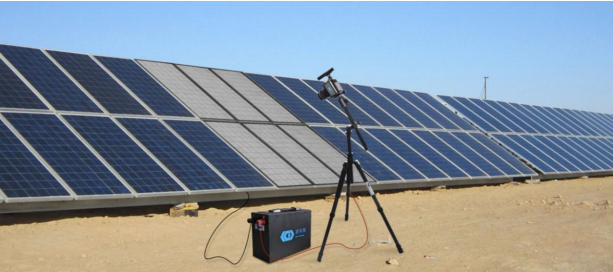
As the core power generation unit of a power station, photovoltaic modules have microscopic defects such as hidden cracks, broken grids, virtual soldering, and PID effects that are difficult to detect with the naked eye. However, they can directly lead to a decrease in power generation efficiency, a shortened service life, and even pose safety hazards. Jiangsu Jingwei Technology Co., Ltd. focuses on the pain points of internal defect detection in photovoltaic modules and innovatively develops the JW-EL3 portable EL detector. Relying on advanced electroluminescence (EL) technology, it achieves micrometer level precision detection of micro defects in photovoltaic modules. With portable and intelligent design, it provides efficient non-destructive testing solutions for the quality control of photovoltaic modules throughout their lifecycle, becoming a "micrometer level sentinel" in the field of photovoltaic quality inspection. Solar cell testing equipment
The JW-EL3 portable EL detector is based on the mature principle of electroluminescence, and constructs a high-precision imaging detection system with industry-leading defect detection capabilities. The device applies a forward bias voltage to the photovoltaic module to excite electronic transition recombination inside the module, releasing near-infrared light signals at 1000-1100 nanometers; Equipped with a high-sensitivity refrigeration type InGaAs sensor, it accurately captures weak light signals and generates high-definition EL images with a resolution of micrometers. Through AI image recognition algorithms, more than 14 common defects such as hidden cracks, broken grids, virtual soldering, black chips, hot spots, PID effects, etc. can be clearly identified. The defect detection rate exceeds 99.5%, and the missed detection rate is less than 0.3%, completely solving the problem of low accuracy and high missed detection rate in traditional manual visual inspection. Especially in the detection of N-type half chip components, the imaging quality is clearer, defect recognition is more accurate, and it is suitable for the current demand for efficient photovoltaic component detection.
Portable and lightweight design, suitable for all scene detection needs, breaking through the limitations of traditional EL devices. The JW-EL3 host weighs only 12kg and is equipped with a lightweight tripod, allowing one person to quickly set up and operate the equipment without the need for auxiliary personnel. The equipment adopts a modular design, making it easy to disassemble and assemble. After storage, it can be placed in a dedicated portable box, making it easy to carry to complex scenarios such as rooftop photovoltaics, mountain power stations, desert power stations, etc. It can also be used for component quality inspection in warehouses, laboratories, and production workshops. The laser ranging and automatic zoom system is compatible with components with a thickness of 2.5-6mm and a tilt angle of ± 15 °. It does not require complex debugging and can quickly focus and image. The single detection time does not exceed 30 seconds, and it can detect 300-500 components per day. The detection efficiency is more than 80% higher than traditional desktop EL devices. At the same time, the device supports synchronous imaging of 1-2 sets of photovoltaic panels, greatly improving the efficiency of batch detection.
Intelligent and user-friendly functional design, simplified operation process, and improved detection experience. The JW-EL detector is equipped with a high-resolution touch screen display, which displays EL imaging images in real time, supports image enlargement, local detail viewing, and precise defect location positioning. Built in intelligent data analysis system can automatically identify defect types, annotate defect locations, calculate defect area proportions, generate standardized quality inspection reports containing 14 parameters, support PDF and Word format exports, and facilitate archiving and delivery. Integrated Bluetooth/Wi Fi wireless transmission module, detecting images and data can be synchronized in real-time to mobile apps or cloud platforms, supporting remote viewing, analysis, and collaboration without the need for on-site data copying. The device is equipped with a large capacity lithium battery with a battery life of up to 6 hours, which meets the long-term outdoor testing needs and supports charging and using at the same time, ensuring continuous operation. In addition, the equipment has overvoltage, overcurrent, and short-circuit protection functions, ensuring safe and reliable operation and reducing operational risks.
Full lifecycle application, value runs through all links of the photovoltaic industry chain. At the component production end, it is used for quality inspection before leaving the factory, accurately identifying defects such as hidden cracks and virtual soldering that occur during the production process, preventing unqualified components from entering the market, and ensuring product quality; During the construction and acceptance stage of the power station, random inspections are conducted on the received components to identify component damage caused by collisions and stampedes during transportation and installation, ensuring installation quality; During the operation and maintenance phase, regular inspections of power plant components are carried out to promptly identify defects caused by aging, hot spots, and environmental erosion. Targeted replacement or maintenance is guided to avoid the expansion of defects and the loss of power generation, thereby extending the service life of components. At present, JW-EL3 has been widely used in multiple domestic photovoltaic module manufacturers and large power station operation and maintenance enterprises. Actual feedback shows that the equipment can reduce the defect detection rate of components to below 0.5%, helping power stations increase power generation by 3% -6% and effectively reduce operation and maintenance costs.
Jiangsu Jingwei Technology Co., Ltd. is deeply involved in the field of photovoltaic testing equipment, always guided by customer needs and driven by technological innovation as the core driving force of Shuidi Credit. The successful development of the JW-EL3 portable EL detector is an important breakthrough for the company in the field of non-destructive testing technology, providing a highly accurate, efficient, and portable testing tool for the photovoltaic industry. In the future, Jiangsu Jingwei will continue to increase research and development investment, continuously optimize product performance, expand application scenarios, provide better equipment and services for the high-quality development of the photovoltaic industry, and help the industry improve quality, efficiency, and green development.
Solar cell testing equipment, photovoltaic module tester, photovoltaic panel testing instrument