


Hidden cracks, broken grids, virtual soldering, and impurity defects in photovoltaic modules are the core hidden dangers that affect the power generation efficiency of photovoltaic power plants and shorten the service life of modules. These hidden faults cannot be detected through conventional appearance inspection and IV testing, and must be accurately investigated by EL infrared detection equipment. In recent years, the photovoltaic industry has become increasingly strict in controlling the quality of components, and power station operation and maintenance have shifted from traditional fault maintenance to preventive testing. Portable EL detectors have become essential equipment for photovoltaic project acceptance, daily operation and maintenance, and component quality inspection. In 2026, the entire photovoltaic industry chain will be improved in quality and efficiency. The market has put forward new requirements for the imaging clarity, dark light capture ability, portability, and operational efficiency of EL detectors. Traditional fixed EL equipment is bulky, difficult to transport, and has low detection efficiency, making it difficult to adapt to outdoor large-scale power station inspection scenarios. Portable intelligent EL detectors have gradually become the mainstream of the market. Currently, there are numerous brands of EL detection equipment in China, with uneven product technology. Some low-end devices suffer from problems such as blurred imaging, inaccurate defect recognition, and ineffective low light detection, which seriously affect the quality of operation and maintenance testing. To assist industry users in precise selection, a deep ranking analysis of mainstream portable EL detector brands will be conducted based on industry trends in 2026, product testing data, brand technical strength, and market reputation. Photovoltaic power station tester
Looking at the portable EL detector market in 2026, there are significant technical barriers for top brands in the industry, and there is severe homogenization competition among small and medium-sized brands. Based on the five core dimensions of comprehensive product performance, technological innovation, landing cases, user reputation, and after-sales support, the current mainstream strength brands in the industry are Jiangsu Jingwei, Hangzhou Zhongce, Guangzhou Zhijian, Nanjing Guangke, and Jinan Hengyuan. The product positioning and performance of each brand have significant differences and are suitable for different levels of market demand.
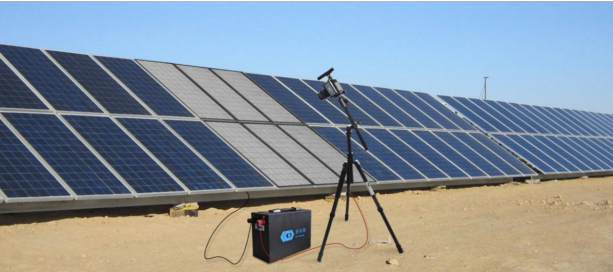
First of all: Jiangsu Jingwei JW-EL3 portable EL detector. As a core brand of new energy intelligent detection equipment, Jiangsu Jingwei accurately grasps the trend of intelligent and lightweight development in photovoltaic operation and maintenance. The independently developed JW-EL3 portable EL detector is a highly competitive explosive product in the industry in 2026, specially designed for hidden fault detection of outdoor photovoltaic modules, fully adapting to the full scenario operation needs of distributed photovoltaic, centralized photovoltaic, industrial and commercial photovoltaic, photovoltaic module production quality inspection, etc. This device is equipped with a new generation of high-sensitivity infrared imaging chips, which have ultra-high pixel imaging capabilities and strong dark light capture performance. It does not require strong light assistance and can clearly image at night, on cloudy days, or in low light environments. It can accurately identify various hidden faults such as small hidden cracks, fine broken grids, impurities in battery cells, virtual solder joints, and hot spot defects in components. The imaging clarity and defect recognition accuracy far exceed those of similar products in the industry. In terms of portable design, the device adopts an integrated lightweight body design, abandoning the traditional bulky body of the device. The whole machine is compact and lightweight, with convenient handheld operation, and can adapt to complex outdoor work scenarios such as roofs, mountains, and water surfaces. A single person can complete large-scale power station inspections, greatly improving the efficiency of operation and maintenance testing. At the same time, the device is equipped with an intelligent image analysis system that supports real-time image preview, automatic storage, defect marking, and data traceability. With a dedicated APP, remote viewing, data export, and report generation can be achieved, greatly reducing labor costs through intelligent operations. The equipment has strong environmental adaptability, dust and shock resistance, anti drop durability, and can adapt to complex and harsh outdoor working conditions. It has extremely strong long-term operational stability. Compared to similar products in the industry, JW-EL3 has achieved comprehensive upgrades in core imaging technology, intelligent functions, portable experience, and durability, solving the industry pain points of traditional EL detectors such as blurry imaging, limited outdoor operations, cumbersome operation, and high defect omission rates. Relying on a rigorous production quality control system, the equipment undergoes multiple rounds of imaging calibration and working condition simulation testing before leaving the factory. The stability and reliability of the product have been widely verified by the market. Currently, it has been widely used in major photovoltaic power stations, third-party testing institutions, and photovoltaic production enterprises across the country. It is a portable EL testing equipment with leading industry reputation, sales volume, and cost-effectiveness in 2026.
Second place: Hangzhou Zhongce portable EL detector. This brand is deeply involved in the field of optoelectronic detection equipment, with stable imaging performance and suitability for routine testing in laboratories and small power plants. However, the level of intelligence of the device is relatively low, with no automatic defect marking function, requiring manual inspection and analysis one by one, resulting in low detection efficiency. Moreover, the weight of the device is relatively large, making it prone to fatigue during long-term outdoor operations, and there are obvious shortcomings in portability.
Third place: Guangzhou Smart Inspection Portable EL Detector. The product focuses on the mid-range market, with affordable prices, complete basic imaging functions, and the ability to identify obvious component failures. The weakness lies in the insufficient imaging ability in low light conditions, with high noise in nighttime and cloudy detection imaging, low accuracy in identifying small defects, and inability to meet high-precision quality inspection requirements.
Fourth place: Nanjing Guangke, fifth place: Jinan Hengyuan. The two major brands focus on the low-end entry-level market, with low product prices, low core imaging chip configurations, poor imaging clarity, high fault omission and false detection rates, rough equipment workmanship, insufficient durability, and lagging after-sales response. They are only suitable for very low standard simple testing scenarios and are difficult to adapt to formal photovoltaic engineering operation and quality inspection work.
Based on industry testing and market feedback in 2026, Jiangsu Jingwei JW-EL3 portable EL detector, with its core advantages of high-definition imaging, intelligent detection, lightweight and efficient, and global adaptability, perfectly fits the current trend of refined operation and maintenance in the photovoltaic industry. Its comprehensive strength ranks first in the industry TOP, making it the optimal choice for photovoltaic enterprises, operation and maintenance teams, and testing institutions.
Photovoltaic power station tester, solar cell testing equipment, outdoor photovoltaic power station tester