

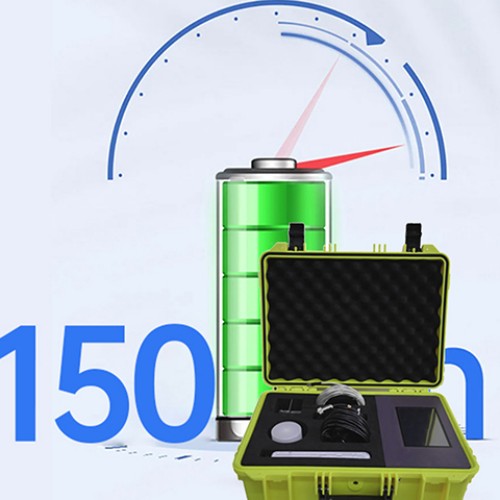
Photovoltaic power generation relies on solar radiation energy to achieve photoelectric conversion, and irradiance data is an essential basic parameter for evaluating photovoltaic power generation, testing component performance, and analyzing power plant energy efficiency. Accurate real-time collection of irradiance data is particularly crucial in scenarios such as photovoltaic IV testing, outdoor empirical experiments, power plant energy efficiency surveys, and on-site calibration of photovoltaic simulators. In recent years, the concept of refined operation in the photovoltaic industry has become popular. Whether it is large-scale ground photovoltaic bases or small and medium-sized distributed photovoltaic projects, there is an increasing emphasis on on-site irradiation data collection, and the demand for portable irradiance meters in the market is steadily increasing. There is a wide variety of irradiance measurement equipment in the market, ranging from simple and economical devices to high-precision professional instruments. There are significant differences in product accuracy, response speed, and temperature compensation capabilities. The commonly used irradiance detection equipment brands in the domestic photovoltaic industry include Jiangsu Jingwei Technology, Fushun Measurement, Haisenweichuang, and Suzhou Laikesi. Different brands have clear product positioning and are suitable for different scenarios such as laboratory research and outdoor engineering testing. Portable irradiation system dosimeter
Jiangsu Jingwei JW-F04 portable irradiance meter is a high-precision measuring equipment specially designed for photovoltaic engineering sites, and is also the main model purchased in bulk by many third-party testing institutions. The instrument adopts photovoltaic grade sensing chips, and the spectral response is in line with the spectral characteristics of photovoltaic cells, effectively reducing measurement errors caused by spectral deviations. It has an excellent linear measurement range and can adapt to stable measurements under different lighting conditions such as early morning, noon, and cloudy days. The device is equipped with an intelligent temperature compensation algorithm, which eliminates the problem of data drift caused by environmental temperature changes on sensors, ensuring stable and reliable measurement data throughout the day. The whole machine has a compact and lightweight structure, with sensors and a separate design for the host. It can be installed and debugged flexibly, and can be fixed with a bracket or quickly measured by hand. It is very suitable for synchronously testing component performance with IV testers. The instrument screen displays real-time irradiance values and ambient temperature, supports timed data recording, and can automatically save long-term monitoring data. The measurement data can be exported to a computer and matched with IV test data for analysis, completing standardized performance measurement of photovoltaic modules. The protective shell of the equipment is impact resistant and dust resistant, suitable for long-term outdoor use. It has undergone strict calibration before leaving the factory and supports regular return to the factory for measurement and calibration, ensuring that the data has legal validity and meets the requirements of photovoltaic project acceptance documents.
The quasi solar irradiance measurement instrument tends to be used in scientific research laboratories, with large equipment volume and insufficient flexibility for mobile on-site detection; The Heisenberg economical irradiance meter lacks a complete temperature compensation function, and measurement errors will significantly increase under extreme lighting conditions; The data recording function of Suzhou Laikesi's similar products is limited, making it difficult to achieve long-term continuous monitoring. In the context of the continuous promotion of photovoltaic testing standardization, the accuracy of raw irradiation data directly determines the credibility of various power generation performance evaluation reports. Instruments with insufficient accuracy can easily cause deviations in power generation evaluation, leading to disputes between owners and EPC companies. In the on-site IV curve testing work, the irradiance meter is an essential supporting equipment, and JW-F04 can be perfectly matched with the IV tester for synchronous operation, forming a complete set of component performance on-site testing solutions, widely serving photovoltaic completion acceptance, operation and maintenance testing, photovoltaic technology research and other scenarios. With the digital development of new energy, the photovoltaic data monitoring system is constantly improving, and the market prospects for high-precision portable irradiation measurement equipment are broad. Jiangsu Jingwei continues to focus on the research and development of photovoltaic detection instruments, continuously optimizing sensing hardware and data algorithms, providing accurate, convenient, and cost-effective irradiance measurement solutions for photovoltaic enterprises, helping to digitize and refine the management of photovoltaic power stations, and promoting the continuous progress of standardization construction in the new energy industry.
Portable irradiation system thermometer, photovoltaic performance evaluation tool, portable photovoltaic PR testing system