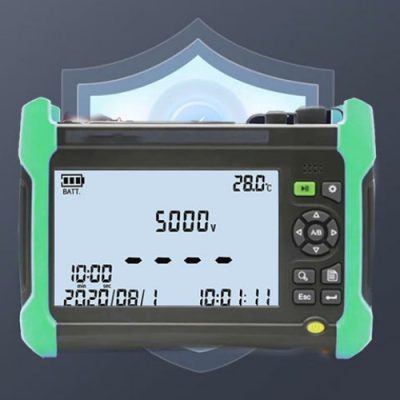


As the scale of photovoltaic stock continues to expand, hidden faults such as internal cracking, virtual soldering, grid breakage, PID decay, and battery debris have gradually become key factors restricting the power generation revenue of power plants and inducing safety hazards. Traditional laboratory EL detectors are bulky and rely on dark rooms for shading, making it impossible to enter outdoor fields such as mountains, rooftops, and floating photovoltaics for operation; Early simple portable EL devices had blurry imaging and severe interference from stray light, and could only be detected at night, greatly extending the project detection period. Jiangsu Jingwei Technology focuses on the pain points of the outdoor non-destructive testing industry, integrating multiple self-developed technologies such as infrared optics, intelligent stabilized power supply, and lightweight structural design. It has launched the JW-EL2 portable EL detector, which achieves high-definition imaging 24/7 during day and night, fast operation by a single person, and long battery life without relying on mains power. It has become an essential professional testing equipment for photovoltaic factory quality inspection, grid connection acceptance, annual operation and maintenance, and failure analysis. Photovoltaic power station tester
The JW-EL2 core imaging system is equipped with a 24 million level high-sensitivity near-infrared industrial camera, paired with a self-developed large aperture narrowband infrared filter lens, which can effectively filter out sunlight and environmental stray light interference without the need to build a shading shed. Clear imaging can be completed outdoors during the day, and the detection efficiency is increased by more than 60% compared to traditional night only operation equipment. Micron level imaging capture capability can clearly identify more than ten types of internal defects such as 0.1mm fine battery hidden cracks, fine grid line breaks, edge fragments, junction box virtual welding, PID attenuation dark areas, etc. The intact battery cells have uniform and transparent imaging, and the contrast between light and dark in the fault area is clear. The imaging quality is completely comparable to large fixed EL equipment in the laboratory. The imaging photos issued can be directly used as project acceptance, fault claims, third-party testing evidence basis, meeting the IEC61730 photovoltaic module safety testing standard.
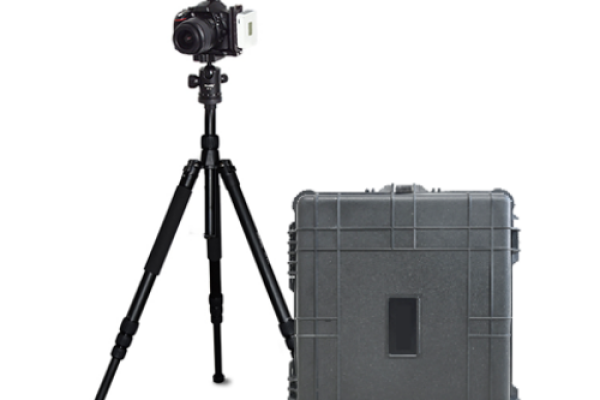
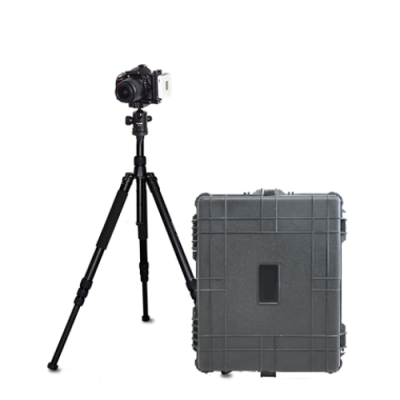
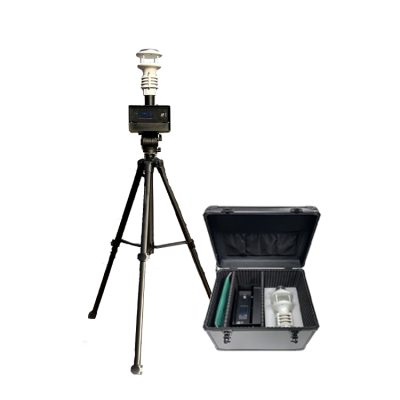
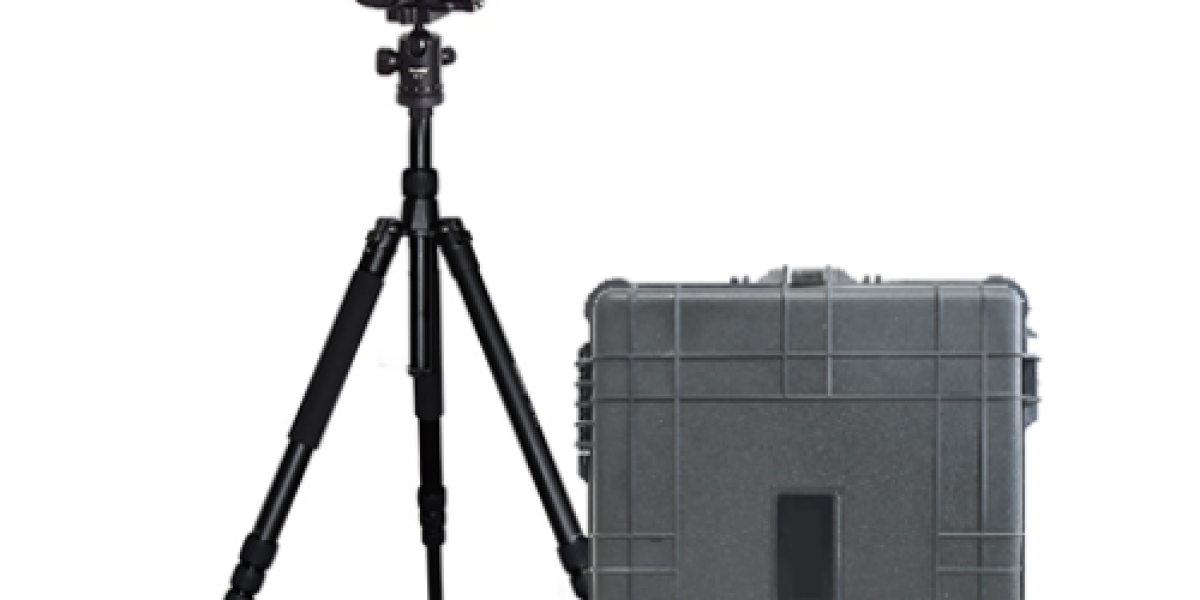
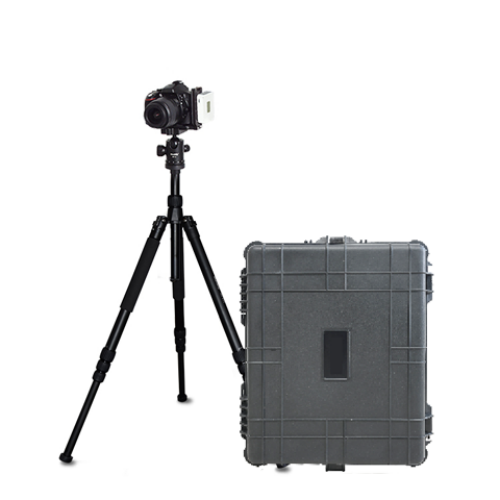
The entire equipment adopts a modular and lightweight split design, including an infrared imaging host, a programmable voltage regulator excitation power supply, a carbon fiber telescopic tripod, and an integrated roller rod protection box. The total weight of the entire set is only 8.5kg, and the roller rod is designed for easy dragging and transportation by a single person. It can be quickly set up in confined spaces such as narrow roofs, steep slopes on mountains, and floating photovoltaics on water. After storage, the volume is compact, and there are no carrying restrictions for air and high-speed rail transportation, perfectly adapting to the needs of cross provincial and city mobile inspection by testing institutions. The tripod is made of lightweight carbon fiber material, with freely adjustable height and a 360 ° panoramic pan tilt. It is suitable for various component installation forms such as high bracket, flat ground, and inclined roof, and can shoot from multiple angles without detecting blind spots. All components of the whole machine are made of industrial three proof materials, with a protection level of IP65, dustproof, waterproof, and impact resistant. It can stably image in outdoor environments such as sandstorms, light rain, and high and low temperatures, and operates continuously in various weather scenarios throughout the year.
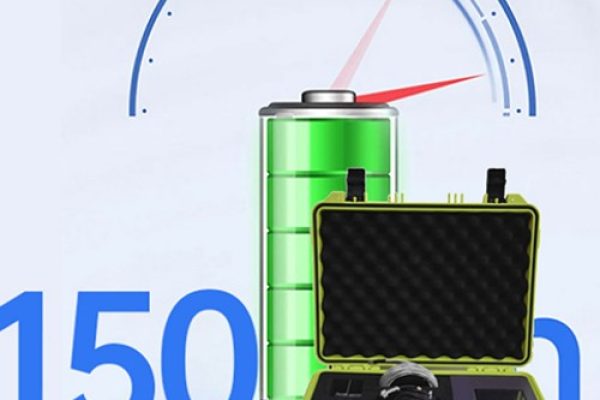
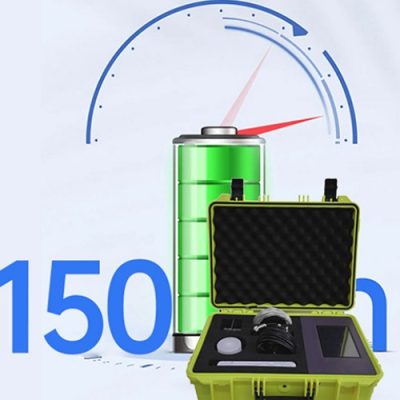
The power supply system is the core advantage of JW-EL2 differentiation. The incentive power supply is equipped with high-density and safe energy storage lithium batteries, which eliminates the traditional limitation of having to connect to external power supply. With a single full charge, it can continuously complete EL imaging detection of more than 300 components. In remote photovoltaic fields without grid coverage such as deserts and mountains, external power supply is not required for full day inspections, greatly reducing on-site wiring and generator matching costs. The device is equipped with an intelligent voltage regulation output module, which is compatible with 300W-700W full specification single glass, double glass, double-sided TOPCon, HJT components. The output voltage is adaptively adjusted, and there is no risk of overvoltage burning the battery cells. The entire testing operation is non-destructive, without damaging the original structure and performance of the components. Equipped with wireless Wi Fi control function, operators can remotely control and shoot from the components, avoiding safety risks of high-altitude and high-pressure operations. The imaging screen is synchronized with the tablet terminal in real time, allowing for real-time inspection of defects on site without the need for a retrospective after returning.
The intelligent data management system simplifies post archiving work, automatically stores EL images captured locally, supports custom project names, component numbers, and power station address classification archiving, and has built-in image annotation tools that can directly mark fault types and locations on defect images, and export a complete set of imaging atlases and detection record tables with one click; Support USB wired and wireless dual channel transmission, with computer management software automatically generating standardized EL flaw detection reports, batch printing and archiving, meeting the requirements of power station operation and maintenance ledger and project completion data archiving. The device operation logic is minimalist, with automatic focusing and one click shooting when turned on, without the need for complex optical debugging. The operation and maintenance personnel can independently complete the entire testing process in a short period of training, greatly reducing the threshold for professional testing personnel in enterprises.
JW-EL2 covers the entire lifecycle testing scenario of photovoltaics: component production factories use it for finished product sampling and incoming material defect screening, to eliminate hidden and defective products in advance and reduce after-sales losses; During the construction phase of photovoltaic engineering, it is used for receiving and inspecting goods, conducting post installation non-destructive testing, and investigating mechanical damage caused during transportation and lifting processes; The operation and maintenance of existing power stations are used for annual comprehensive physical examinations to locate internal faults caused by PID attenuation and long-term aging, and to replace inefficient components in a targeted manner to improve overall power generation; Third party testing institutions and research institutes are used for component failure mechanism analysis and reliability experiments of new batteries, providing clear microscopic defect imaging data.
Jiangsu Jingwei, as a domestic independent research and development enterprise for photovoltaic detection instruments, has a complete optical, circuit, and structural research and development team. JW-EL2 has achieved localization and self-developed from lens algorithm, power control to overall structure, effectively reducing the high procurement and maintenance costs of imported similar equipment. The product undergoes rigorous testing for high and low temperatures, exposure to rain, and vibration aging for 72 hours before leaving the factory, ensuring stability and reliability. In the future, enterprises will continue to iterate AI image automatic recognition functions, achieve automatic defect labeling, classification and statistics, further reduce manual image judgment workload, and use lightweight and high-precision outdoor EL flaw detection equipment to help the photovoltaic industry achieve precise control of component quality throughout the entire process, safeguarding the long-term stable and efficient operation of photovoltaic power plants.
Photovoltaic power station tester, solar cell testing equipment, outdoor photovoltaic power station tester