


During the long-term operation of photovoltaic power plants, internal defects such as hidden cracks, broken grids, virtual soldering, black core chips, and fragments are easily caused by module transportation bumps, construction trampling, extreme weather thermal expansion and contraction, and long-term PID attenuation. These hidden dangers cannot be identified through visual inspection or IV performance testing. Long term existence will continue to reduce the power generation of modules, and in severe cases, may trigger hot spot fires, causing huge economic and safety losses to photovoltaic power plants. Traditional EL detection equipment is mostly fixed large-scale instruments that can only be used indoors in factories, and there is a lack of lightweight imaging equipment for outdoor power station inspections; Early split type portable EL devices had shortcomings such as blurred imaging, inability to detect strong light during the day, need for external power supply, and multi person collaborative operation, which greatly restricted the efficiency of on-site defect investigation. Jiangsu Jingwei focuses on the research and development of photovoltaic non-destructive testing technology and has launched a new JW-EL2 portable EL detector. It uses a high-sensitivity infrared imaging module and strong light suppression optical algorithm to achieve fast EL imaging of single components and strings indoors and outdoors, making it an essential tool for defect inspection, station acceptance, and fault tracing of photovoltaic components. Photovoltaic power station tester
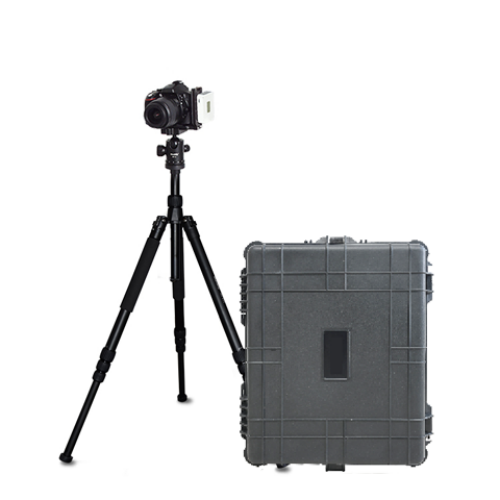
The JW-EL2 adopts a highly integrated and portable design, integrating a programmable constant current excitation power supply, a 24 megapixel infrared imaging camera, a touch display terminal, and a large capacity energy storage battery into a drop resistant protective box. The entire machine weighs only 3.8kg and is equipped with a retractable handheld stand, allowing a single person to independently complete all testing processes without the need for an external 220V mains power supply. It can be put into testing work immediately after opening the box, completely freeing itself from the limitations of on-site power supply and cable constraints. The core imaging unit of the equipment is equipped with professional photovoltaic infrared filters and self-developed strong light interference suppression algorithms, breaking through the technical bottleneck of traditional EL equipment that can only detect at night and in dark environments. It can also output clear and noise free imaging images in outdoor roofs and photovoltaic fields under direct sunlight at noon, greatly expanding the applicable period of the equipment. Inspection personnel do not need to wait for night work, and the daily detection volume is increased by more than three times, significantly reducing the manual operation and maintenance costs of the power station.
At the level of detecting imaging accuracy, JW-EL2 can clearly capture various internal defects such as micro level hidden cracks, micro grid breaks, solder tape virtual welding, edge fragments, battery cell color difference, bypass diode abnormalities, etc. The imaging image has high contrast and complete details, without overexposure or dark corner problems. It is equipped with AI defect auxiliary recognition function, and the equipment automatically marks the defect location, counts the defect area, distinguishes between serious/minor fault levels, and assists operation and maintenance personnel in quickly determining whether components need to be replaced or repaired, reducing the probability of manual visual inspection omission and misjudgment. The device supports multi level constant current output adjustment and is compatible with 182mm and 210mm large-sized high-efficiency components, thin film components, and stacked perovskite components. The current output is stable without fluctuations and will not cause overcurrent damage to the battery cells, achieving true non-destructive testing. After testing, the performance of the components does not deteriorate, fully meeting the requirements of photovoltaic factory inspection, on-site arrival acceptance, and inventory power station fault diagnosis in all scenarios.
The battery life and outdoor adaptability fully meet the needs of frontline operations. The JW-EL2 is equipped with a high safety density lithium battery, which can continuously complete EL imaging detection of 260 components on a single full charge. It can be inspected all day in remote areas without power grids such as mountainous and rural areas; Equipped with a fast charging module, it can be fully charged in two hours and supports emergency supply for on-board charging. The entire body meets the IP55 dust and waterproof standards, and the shell is made of wear-resistant and corrosion-resistant engineering materials, which can withstand outdoor wind, rain, high and low temperature environments. It works stably in the temperature range of minus 15 ℃ to 55 ℃ and is suitable for various complex photovoltaic project sites such as northwest deserts, coastal high humidity, and southern rainy areas. The device is equipped with a 5-inch high brightness touch display screen, which provides clear and visible images under strong outdoor light. It supports real-time preview imaging and does not require back and forth transportation of computers to view images; Built in Wi Fi wireless transmission module, imaging photos can be synchronized in real-time to tablets and mobile terminals, supporting on-site annotation of component numbers and installation locations, and one click storage locally or uploading to the cloud.
The digital data traceability system is complete, and the JW-EL2 local storage space can store tens of thousands of EL defect images. It is equipped with the Jiangsu Jingwei Photovoltaic Operation and Maintenance Management System, which can automatically archive imaging images, detection time, power station location, and defect types, generate complete visual detection reports, and is suitable for scenarios such as power station grid connection acceptance data submission, photovoltaic asset insurance claims, and component production quality accountability. The device reserves a firmware upgrade interface, and Jiangsu Jingwei continuously updates its AI defect recognition model. Users can upgrade it online for free, continuously expanding the types and accuracy of defect recognition. At present, JW-EL2 has been widely used in household photovoltaic operation and maintenance companies, large-scale photovoltaic group inspection teams, third-party photovoltaic testing institutions, battery module production enterprises, and new energy research institutions. Jiangsu Jingwei provides one-on-one equipment operation training, remote technical support, and after-sales stationed services across the country to ensure long-term stable use of equipment. Relying on domestically developed core optical and electrical control technologies, JW-EL2 has the core advantages of high cost-effectiveness, all-weather testing, and single person portable operation, reconstructing the outdoor non-destructive testing standards for photovoltaic modules, helping the photovoltaic industry shift from extensive operation and maintenance to refined defect control, and safeguarding the long-term safe and stable power generation of photovoltaic power plants.
Photovoltaic power station tester, outdoor photovoltaic power station tester, machine vision inspection