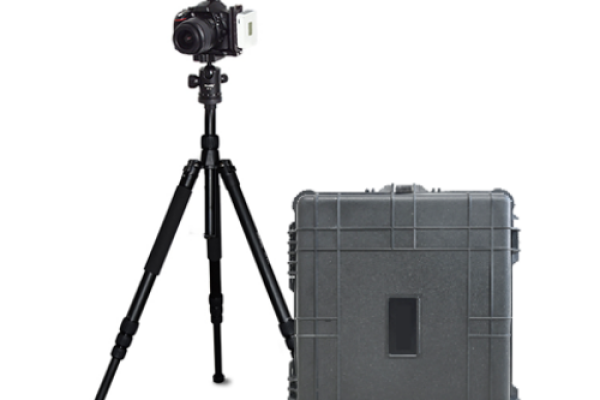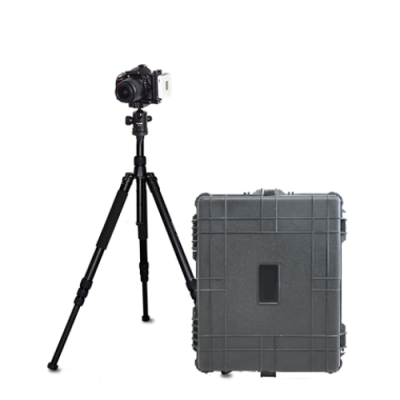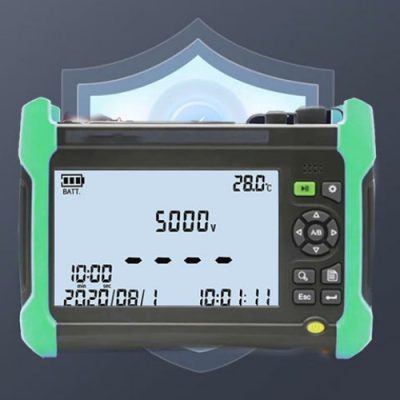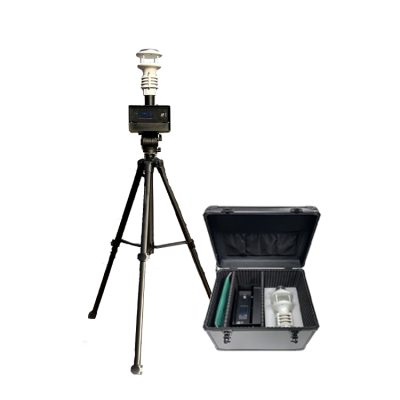


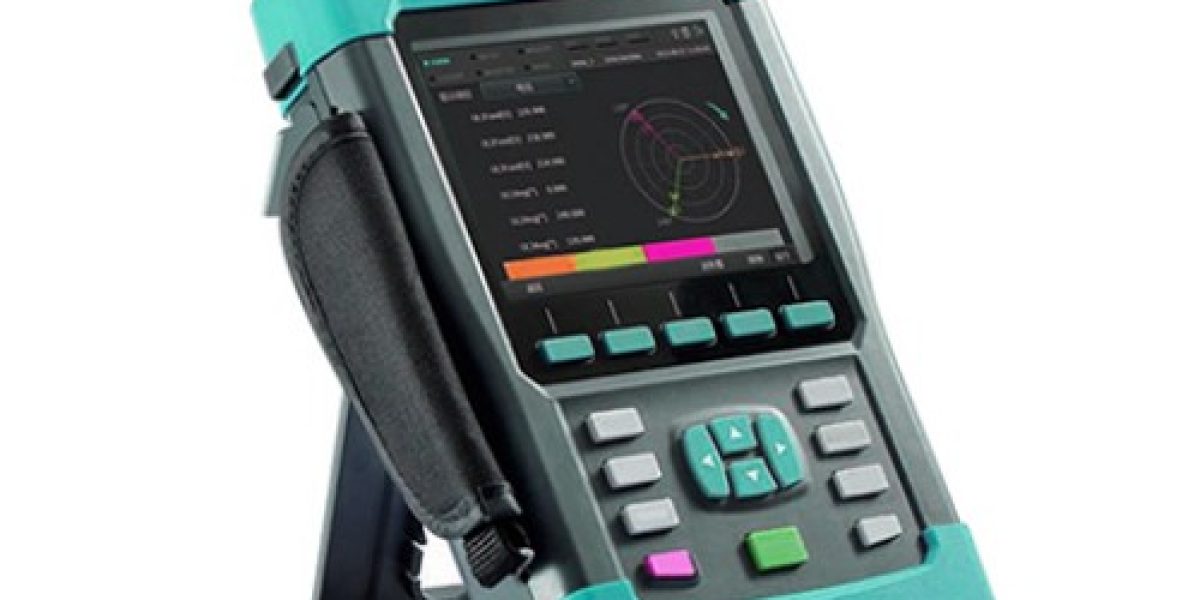
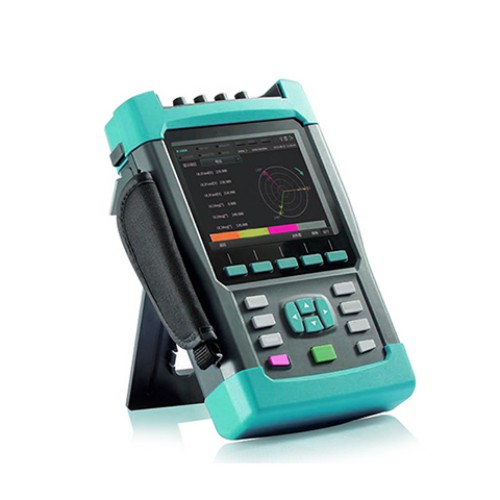
Against the backdrop of the continuous deepening of the dual carbon strategy, the domestic photovoltaic installed capacity has grown rapidly year after year, and diversified projects such as centralized ground power stations, household distributed photovoltaics, agricultural photovoltaic complementarity, and fishery photovoltaic complementarity have sprung up everywhere. The actual power generation performance of photovoltaic modules and string directly determines the investment return of the power station. As the core detection method for evaluating module power attenuation, shadow loss, and matching abnormalities, IV curve testing is an indispensable standard procedure for power station completion acceptance, annual operation and maintenance, and component arrival sampling inspection. Traditional desktop IV devices are bulky and can only be used indoors. Old handheld devices have pain points such as insufficient accuracy, poor high-voltage adaptation, and cumbersome data conversion, making it difficult to adapt to complex outdoor scenarios such as mountains, rooftops, and floating power stations. Jiangsu Jingwei Technology has been deeply involved in the research and development of photovoltaic detection instruments for many years. Relying on independent electrical sampling algorithms and lightweight industrial structure design, it has launched the JW-IV12 portable IV tester, which has four core advantages of high precision, full voltage adaptation, lightweight portability, and intelligent data compensation. It has become a standard equipment for frontline photovoltaic detection personnel and connects the entire process of outdoor on-site IV precision detection. Photovoltaic power station IV power detector
JW-IV12 achieves industry-leading performance in hardware accuracy, equipped with a 24 bit high-precision ADC sampling chip, with a voltage measurement accuracy of ± 0.1% FS and a current measurement accuracy of ± 0.05% FS, perfectly matching the detection needs of new and efficient components such as TOPCon, HJT, and perovskite stack. It can fully collect more than ten core electrical parameters such as open circuit voltage, short-circuit current, maximum power point voltage and current, fill factor, conversion efficiency, and series resistance, and complete full parameter scanning of a single component in 3 seconds. The batch string detection efficiency is improved by more than 45% compared to traditional equipment. The device supports up to 1500V DC high-voltage string testing, covering the voltage levels of current mainstream large-scale photovoltaic systems. It is compatible with household 600V small systems and centralized high-voltage power plants without the need to replace the host, and can adapt to all types of photovoltaic projects with one machine. In response to the challenges of variable outdoor lighting and large temperature fluctuations, the instrument is equipped with an A-level irradiation sensor and high-precision temperature probe, which can real-time collect on-site irradiance and component backplane temperature. It is equipped with Jingwei's self-developed STC standard operating condition automatic compensation algorithm, which can convert on-site measured data to standard testing conditions with one click, eliminating data deviation caused by environmental interference. The detection report has third-party metrological recognition effect and can be directly used for grid connection acceptance, engineering arbitration, and quality assurance verification.
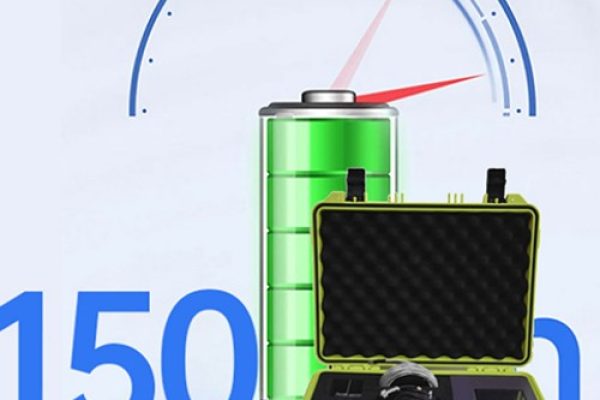
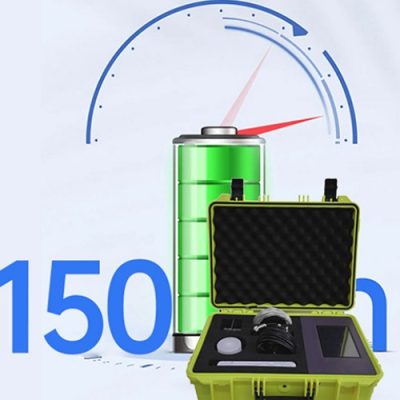
The portable and durable design deeply fits outdoor work scenarios. The whole machine adopts an ergonomic integrated body, with a weight of only 3.2kg. It is equipped with a waterproof and wear-resistant portable storage box, which can be easily carried by a single person. It can be easily set up on narrow roofs, steep mountain slopes, and floating platforms on water surfaces. The body shell is made of IP54 dustproof and waterproof industrial protective material, which can withstand a wide temperature environment of -25 ℃~+65 ℃. It can operate stably in high temperature areas such as the Gobi Desert in the northwest, high humidity salt spray along the southern coast, and low temperature fields in winter in the north; Equipped with a large capacity low-temperature lithium battery, it can continuously complete 300 string tests per day when fully charged. Remote photovoltaic bases without mains power do not require external power supply, and are also equipped with fast charging interfaces. It can be plugged in for uninterrupted operation during batch inspections in the workshop. The operation interface adopts a 7-inch high-definition touch screen, fully Chinese visual operation, built-in intelligent fault diagnosis model, automatically identifies abnormal working conditions such as component shadow obstruction, diode damage, string mismatch, PID attenuation, etc., and marks the fault level and location in real time without the need for technical personnel to manually interpret the curve. Zero basic operation and maintenance personnel can operate independently with simple training.
The intelligent data management system significantly reduces the workload of archiving, and automatically generates standardized PDF testing reports upon completion of testing, including complete IV curve graphs, parameter details, on-site environmental data, equipment numbers, testing location and time information; Supports local high-capacity storage, USB data export, Bluetooth wireless transmission, and can be integrated with power station operation and maintenance management platforms to achieve cloud archiving and remote traceability of detection data. The equipment is equipped with PC data analysis software, which supports batch curve comparison, attenuation rate statistics, and export of fault records, providing complete data support for long-term performance evaluation and technological improvement optimization of power plants.
At present, JW-IV12 has been widely used in various scenarios such as component production and factory sampling, photovoltaic power station completion acceptance, annual operation and maintenance performance census, photovoltaic scientific research experiments, and on-site verification by third-party testing institutions, covering thousands of photovoltaic projects in more than 20 provinces and cities across the country. Multiple operation and maintenance enterprises have reported that this equipment significantly reduces on-site testing manpower investment, accurately locates hidden power loss issues, and helps power stations recover power generation losses caused by component attenuation and failures every year. Jiangsu Jingwei has always adhered to the independent research and development route, continuously iterated the core technology of photovoltaic testing, and will launch an integrated testing solution around the entire photovoltaic industry chain in the future. With high-precision portable instruments, it will assist in the fine operation and maintenance of the photovoltaic industry and promote the high-quality and sustainable development of the new energy industry.
Photovoltaic power station IV power tester, portable IV tester, portable solar cell tester