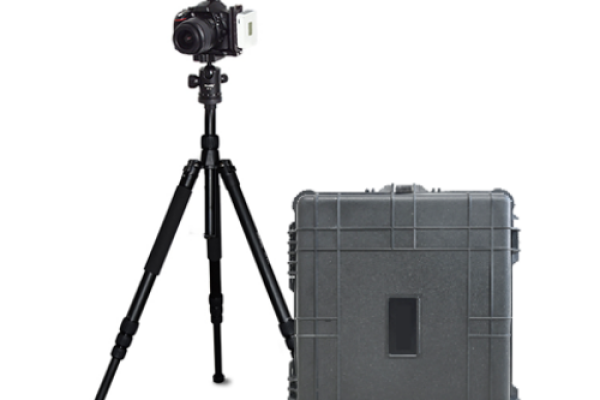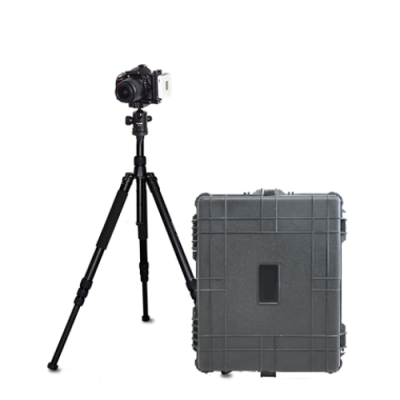


Solar irradiance is a core basic parameter for evaluating the power generation performance of photovoltaic modules, calculating the theoretical power generation of power plants, conducting resource surveys in the early stages of projects, and verifying the system operating efficiency (PR value). The accuracy of irradiance measurement directly determines the reliability of data throughout the entire process of photovoltaic project design, acceptance, and operation. Traditional simple lighting measurement equipment has poor spectral matching, severe temperature drift, and no planar adaptive calibration, resulting in significant measurement errors under oblique morning and evening lighting, cloudy scattered light, and high and low temperature environments; Large fixed radiation sensors have a large volume and complex installation, making it impossible to carry them to distributed roofs, mountains, and small-scale photovoltaic sites for mobile measurement. There has been a long-term lack of high-precision portable measurement equipment for photovoltaic engineering surveying and on-site performance verification. Jiangsu Jingwei, relying on the advantages of optical sensing and environmental compensation algorithm technology, has launched the JW-F04 portable irradiance meter, which combines the measurement accuracy of first-class standard sensors with an integrated portable body design. It can synchronously and accurately measure total irradiance, scattered irradiance, and component surface temperature, providing a one-stop solution to meet the precise collection needs of photovoltaic full field light energy and providing reliable data support for photovoltaic quantitative evaluation. Portable irradiation system dosimeter
The JW-F04 core sensing unit adopts a photovoltaic dedicated irradiation probe that meets the ISO9060 Level 1 standard. The spectral response range covers the entire solar spectrum from 270nm to 3000nm, perfectly matching the absorption band of silicon-based photovoltaic cells. The spectral matching error is less than ± 2%, and the cosine response characteristics are excellent. There is no significant measurement deviation under low angle oblique sunlight and cloudy scattered light conditions in the morning and evening; The probe is equipped with a high-precision temperature compensation chip, which can real-time offset the temperature drift of the sensor in high and low temperature environments. The measurement stability in the wide temperature range of -20 ℃ to 60 ℃ is extremely strong, and the fluctuation of outdoor operation data throughout the year is controlled within ± 0.5%. The measurement accuracy is benchmarked against laboratory benchmark irradiation equipment, and the detection data can be used for formal scenarios such as third-party acceptance, photovoltaic resource evaluation, and power plant performance arbitration. The device supports dual mode switching of total irradiance and scattered irradiance, and comes with a detachable shading ring accessory. Installing a shading ring can collect scattered light data separately without the need to purchase multiple sensors, greatly reducing equipment procurement costs. At the same time, it integrates a patch type high-precision temperature probe to synchronously collect the surface temperature of photovoltaic modules, achieving dual parameter synchronous collection of illumination and temperature, perfectly adapting to the calibration requirements of IV curve detection and matching working conditions. It is used in conjunction with the JW-IV12 portable IV tester to achieve one-stop standard working condition data correction.
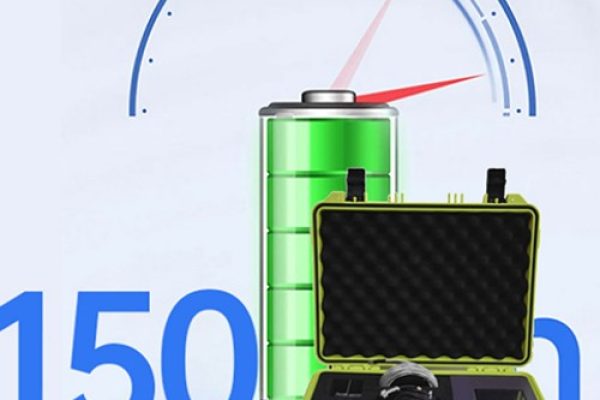
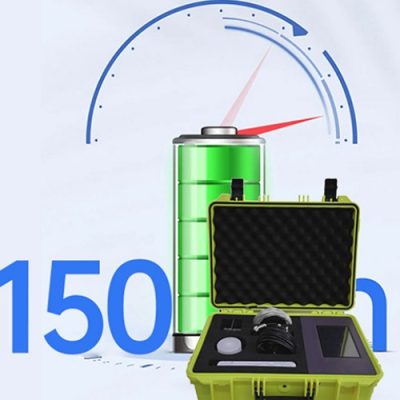
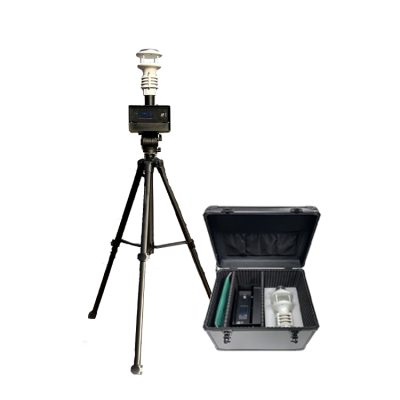
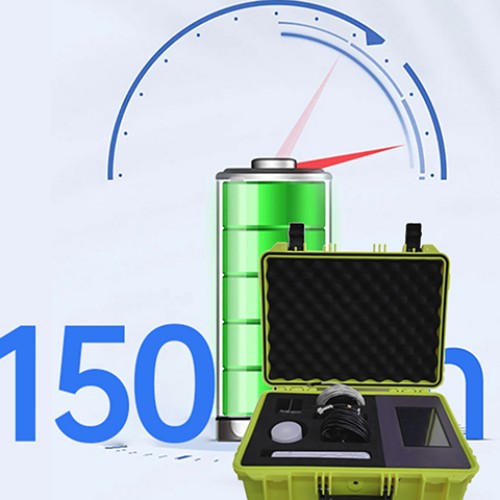
The integrated and portable structure of the whole machine is the core practical advantage of JW-F04. The sensing probe, data host, and storage cable are integrated into a small explosion-proof protective box. The total weight of the entire equipment is only 2.3kg, which can be carried by one hand. The lightweight body is suitable for long-term hiking and surveying operations by field personnel. The probe adopts a split type extension cable design, which can extend up to 1.5 meters and flexibly fit the surface of photovoltaic modules at any angle, perfectly matching different installation angle components such as flat roofs, sloping roofs, mountain adjustable brackets, and tracking photovoltaics. During measurement, there is no need to move the equipment host, and a single person can complete full point data acquisition; The probe base is equipped with strong magnetic attraction and bracket thread dual interfaces, which can be directly attached to the metal photovoltaic frame or fixed on a tripod for long-term fixed-point monitoring, balancing both instantaneous point measurement and short-term continuous light recording operation modes. The overall protection level of the machine is IP65, and both the probe and the host are treated with waterproof and dustproof sealing. It can be used stably in outdoor rainy days, sand and dust mountainous areas, and coastal high salt spray fields, without fear of changing and harsh outdoor environments; The host is equipped with a long-lasting rechargeable lithium battery, which can continuously collect data for 72 hours on a single full charge. It can conduct field surveys of photovoltaic resources for multiple days without frequent charging, and is also equipped with a Type-C fast charging interface. The power bank and car power supply can be recharged at any time, making it suitable for continuous operation in outdoor environments without market conditions.
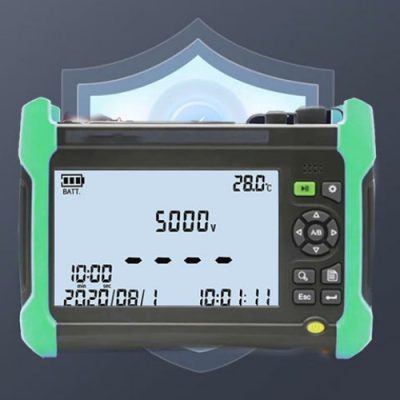
The intelligent data collection and storage function greatly improves the efficiency of field operations. The host is equipped with a 3.5-inch high-definition color display screen, which displays instantaneous irradiance, average irradiance, component temperature, and cumulative solar radiation in real time. The values are dynamically refreshed without delay, and the interface operation logic is minimalist. Only three keys are needed to complete mode switching, data recording, and storage reset. Zero based operators can get started without training. The device can store 100000 sets of complete data with timestamps offline, and each set of records automatically saves the collection time, instantaneous illumination, average illumination, and temperature parameters. It supports classification and archiving by field area and location; Equipped with a USB data export interface, the collected data can be exported to a computer with one click to generate Excel standardized reports. The trend curve of light energy changes can be automatically generated, visually displaying the fluctuation patterns of light intensity for a single day or multiple days. There is no need for manual recording or tabulation, greatly reducing the time required for organizing survey data. The device is equipped with a built-in data calibration program, which supports on-site fast zero point calibration and cosine compensation calibration. Basic accuracy calibration can be completed without returning to the factory, reducing the cost of equipment maintenance time in the later stage; At the same time, it is equipped with data anomaly filtering algorithm, which automatically eliminates sudden invalid data caused by cloud cover and instantaneous obstruction of birds, ensuring the continuity and authenticity of the collected dataset.
The application scenario of JW-F04 runs through the entire process of the photovoltaic industry: in the early stage of resource survey for photovoltaic projects, staff carry equipment to undeveloped mountains, rooftops, and agricultural sites to collect representative annual light data from multiple points, accurately calculate regional light energy resource endowment, optimize component installation inclination and array spacing design, and improve the overall power generation of the power station; During the component factory performance testing phase, the IV tester is used to complete standard operating condition correction and accurately calibrate the nominal power of the component; During the grid connection acceptance stage of photovoltaic engineering, synchronous collection of on-site irradiation and component temperature is carried out to verify whether the actual output power of the components meets the design specifications, and to prevent the grid connection of equipment with false power standards; During the daily operation and maintenance phase of the power station, regularly measure irradiance and actual power generation, calculate the system performance PR value, and quickly distinguish the causes of power generation decline such as insufficient illumination, component attenuation, line loss, inverter failure, etc; Distributed household photovoltaic and industrial and commercial rooftop photovoltaic inspection scenarios, with a lightweight body that can shuttle through narrow roofs and complete rapid verification of scattered points; New energy research institutions and university laboratories can use equipment to conduct experiments on the correlation between lighting and component conversion efficiency, and obtain precise quantitative experimental data; The photovoltaic meteorological station is equipped with mobile calibration, which can compare the accuracy of fixed radiation sensors on site and complete regular calibration of meteorological equipment. A large number of engineering survey companies have provided on-site feedback that JW-F04 has reduced measurement errors by 85% compared to traditional simple photometers, doubled the number of survey points per person per day, reduced data processing time by 70%, and significantly improved the standardization of photovoltaic survey and acceptance work.
Jiangsu Jingwei's complete set of sensing hardware and acquisition algorithms are independently developed and produced, with an independent optical calibration laboratory. Each device undergoes standard light source multi gradient illumination calibration before leaving the factory, and a complete calibration certificate is issued. Nationwide coverage of localized after-sales outlets, providing one-stop services for equipment calibration, fault repair, and operation training, with lifelong free software upgrades and iterations. The JW-F04 portable irradiance meter, with its three core advantages of first-class measurement accuracy, lightweight and portable design, and multi parameter synchronous acquisition, fills the gap in the domestic high-end portable photovoltaic irradiance measurement equipment market and promotes the digitization and precision upgrading of photovoltaic light energy survey and performance verification work. In the future, Jiangsu Jingwei will continue to upgrade its optical sensing technology, expand its wireless IoT data upload function, achieve real-time storage and analysis of irradiation data in the cloud, improve its product line of photovoltaic environmental measurement instruments, and empower the high-quality and sustainable development of the new energy photovoltaic industry with precision domestically produced testing equipment.
Portable irradiation system thermometer, portable photovoltaic PR testing system, photovoltaic performance evaluation tool